Systems | Development | Analytics | API | Testing

Enterprise Guide: Securing LLM Access to Your Databases | DreamFactory

Large language models (LLMs) can transform how businesses interact with data, but connecting them directly to databases presents serious risks. Security concerns include credential exposure, SQL injection, and the "Confused Deputy" problem, where elevated AI privileges bypass user permissions. Since LLMs lack built-in authorization, securing access requires external measures. Here’s how to protect your databases when integrating LLMs.

The Dangerous Power of Local AI Agents. #speedscale #proxymock #aiagents #openclaw #localai

I’ve been testing OpenClaw, a fully autonomous agent that lets you remote control your entire system via Signal. It’s incredibly powerful to text your computer from a coffee shop and have it execute tasks, but you’re essentially handing the keys to your digital kingdom to an LLM. The Golden Rule: Trust, but verify. I’m using Proxymock to sniff every single API call going in and out of the agent. If there’s a data leak or a "hallucination" that tries to wipe my drive, I see it first.

Stop Checking Clients One-by-One: Multi-Account Analysis with AI

Imagine managing multiple clients and instantly answering "Who has the lowest cost per conversion?" without opening a single spreadsheet. We're going to show you how to use Databox MCP to query multiple client accounts simultaneously and run an instant performance benchmark to compare ad spend and conversion rates side-by-side. About this series: This video is part of our "Chat with Your Data" series, where we explore the Databox MCP.

How to Cut BI Ticket Backlogs with AI-ETL for Self-Serve Analysts

Your BI team didn't sign up to spend 69% of their time on repetitive data preparation tasks. Yet this is the reality for most data teams drowning in support ticket backlogs while strategic initiatives languish. Every hour spent manually updating schemas, troubleshooting failed data loads, or running ad-hoc queries is an hour not spent on the analytics that actually drive business decisions.

Model Context Protocol (MCP) Security: How to Restrict Tool Access Using AI Gateways

For too long, the Model Context Protocol (MCP) has operated on a principle of open access: connect an AI agent to an MCP server, and it gets access to every single tool that server offers. While this approach is simple for initial experimentation, it quickly becomes a liability in production.

Why Enterprise AI Projects Fail - The Token Predictor Problem Executives Don't Understand

Why do large language models hallucinate? It's not a modeling problem. It's a data and context problem. This video breaks down why AI fails in enterprise environments and what it takes to get reliable, verifiable answers from your AI systems. When AI doesn't have governed access to live data, no understanding of your business rules, and no guardrails to keep it grounded, hallucinations aren't just likely. They're inevitable.

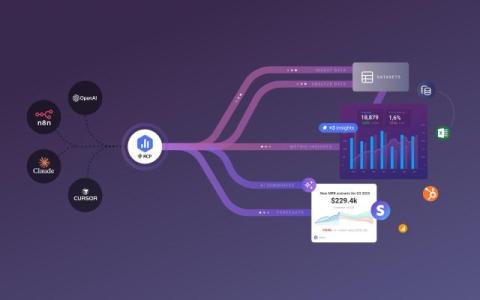
New: Connect Databox to Claude, ChatGPT, N8N, and more!

Most teams today are expected to move faster and be data-driven, but getting clear answers about performance is still harder than it should be. Even simple questions often require jumping between dashboards, piecing together insights manually, or relying on a small group of data experts to dig in. The process can be slow, and it often leads to more questions than answers.

CMS Interoperability : Reimagining Prior Authorization with Conversational AI

Prior authorization has long been one of healthcare’s most time-consuming and costly administrative processes, creating friction between payers, providers, and patients. Manual data entry, back-and-forth faxes, and complex coverage rules often delay care delivery and frustrate both clinicians and members. In this webinar, we'll explore how conversational AI — combined with FHIR-based interoperability, contextual understanding, and an agentic approach — can revolutionize the prior authorization process. Discover how AI-driven, human-like interactions can transform prior authorization into a seamless, intelligent workflow.