Systems | Development | Analytics | API | Testing

Why Performance is the New Security in Open Banking (And Why Speed Defines Trust)

Quick Answer Open Banking performance is as critical as security because slow API responses lead to transaction failures, user abandonment, and loss of trust. To ensure success, banks must optimise latency across API chains, monitor p95/p99 metrics, and design systems for speed from the start. Imagine a digital banking customer. Let’s call him David, standing at a crowded airport terminal. He’s trying to book a last-minute flight through a travel aggregator.

What 40+ engineering teams learned about shipping AI to users at scale

There’s no shortage of noise in AI right now. New frameworks, protocols, demos, and acronyms appear almost weekly. But when you speak directly to the teams actually shipping AI to users at scale, a different picture emerges. This is what we've learned over the last few months from speaking to CTOs, AI engineering leads, and product leaders from unicorns, public companies, and fast-growing platforms across industries where humans interact directly with AI.

Why Choose OAuth for API Security: A Complete Azure AD Integration Guide for DreamFactory

In an era where API breaches make headlines weekly, choosing the right authentication mechanism isn't just a technical decision—it's a business-critical one. OAuth 2.0 has emerged as the industry standard for securing API access, and when combined with Azure Active Directory and DreamFactory, it creates a robust, enterprise-ready security architecture that protects your data while streamlining user access.

5 Best Platforms for Managing Cloud Costs Through Architecture Design

Cloud cost control often starts too late. By the time a team reviews a monthly bill, the decisions shaping that bill are usually already locked in. Workloads have been placed. Redundancy has been designed in. Regions have been chosen. Services have been duplicated. Data transfer paths have been created. What looks like a finance problem later is often an architecture problem much earlier.

Connecting On-Premises LLMs to Enterprise Databases and APIs | DreamFactory

As organizations increasingly recognize the value of generative artificial intelligence, many are moving away from cloud hosted models in favor of on premises Large Language Models. This shift is primarily driven by the need to protect sensitive corporate data, maintain regulatory compliance, and reduce latency. However, an isolated local model offers limited utility. To truly unlock the potential of an on premises LLM, enterprises must connect it to their internal databases and APIs.

XPath vs CSS Selectors in Katalon: Write Stable Locators

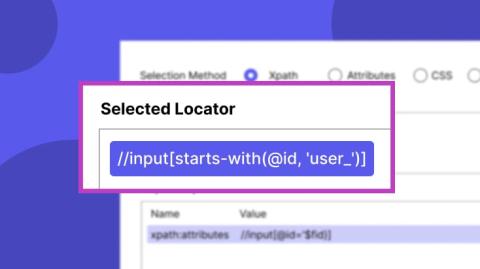
Robust test automation in Katalon Studio starts with stable test objects. Flaky tests almost always trace back to one root cause: brittle locators that break the moment the UI changes. The best approach is to use unique, static attributes like id or custom data-qa attributes. When those aren't available, CSS and XPath are your tools. This post covers how to write each type of selector, when to choose one over the other, and how to handle dynamic attributes using contains() and starts-with(). At a glance.

Why Node.js Upgrades Are Still Hard - And How OpenJS + NodeSource Are Addressing It

In today’s ecosystem, building with Node.js is not just about writing code. It’s about running systems that are reliable, secure, and able to evolve over time. That’s where collaboration at the foundation level becomes critical. At NodeSource, working closely with the OpenJS Foundation is not just a partnership. It’s a commitment to the long-term health, security, and evolution of the Node.js ecosystem.

Why we built vision AI into TestComplete: Solving the complex app testing challenge

When we talk to testing teams at enterprise organizations, we hear the same frustrations repeatedly: “Our automation breaks every time the UI changes.” “We can’t test this application because it doesn’t expose accessible properties.” “We spend more time maintaining tests than creating new ones.” These scenarios block test automation adoption for teams that need it most.

Data Silos Could Be Your Biggest Cloud Liability

In an always-on industrial economy, fragmented data is a liability. Your analytics reports may look flawless, but if they’re built on data silos scattered across edge, core, and cloud, they’re built on a fault line. Data silos drive-up costs, distort the critical decisions meant to drive competition, and prevent organizations from reaching a state of data singularity — where data becomes unified, portable, and continuously usable for AI.