Systems | Development | Analytics | API | Testing

AI as External Imagination

AI isn’t replacing testers—it’s becoming an extension of how they think. Here’s how @Maaret Pyhäjärvi sees it: Applications make us more creative, acting as an “external imagination.” Testers do the same for developers—when devs anticipate tester feedback, their testing improves. AI, when used right, serves a similar role: it challenges us to refine and rethink, not just automate. The real power of AI in testing?Doing the work for usPushing us to think better.

Best Practices for Monetizing AI Successfully

Artificial intelligence has become a driving force behind modern innovation, helping businesses across all industries optimize processes and generate income. But how do you monetize AI usage effectively? Whether you’re integrating AI features into an existing plan or launching entirely new AI products, choosing the right approach can unlock steady revenue growth and strengthen competitive advantage.

Best Open Source LLMs in 2025

Open source LLMs continue to compete with proprietary models on performance benchmarks for natural language tasks like text generation, code completion, and reasoning. Despite having fewer resources than closed models, these open LLMs offer cutting-edge AI without the high costs and restrictions of proprietary models. However, running these open-source models in production and at scale remains a challenge.

EP 10: 2025 Predictions

What’s the Forecast? A look at data and AI in 2025 2025 is set to be a year of growth and change, particularly in the AI space. Over the last couple of years, AI has evolved from a niche technology to a driving force behind business strategies, innovation, and efficiency in almost every industry. Its impact is felt far and wide. It is not only shaping how we search for information, but how we digest and react to the world around us.

The Hidden Cost of AI Efficiency

AI is changing the way developers and writers work, but not always in the ways we expected. Here’s what’s really happening in 2025: Developers are now spending more time reviewing AI-generated code than writing it. Faster isn’t always better. Writers who used to rely on peer feedback are getting instant AI edits—but at the cost of real collaboration. AI is a powerful tool, but it’s shifting roles instead of eliminating work. The question isn’t if you use AI, it’s how you integrate it.

How to Run an Automated CI/CD Workflow for ML Models with ClearML

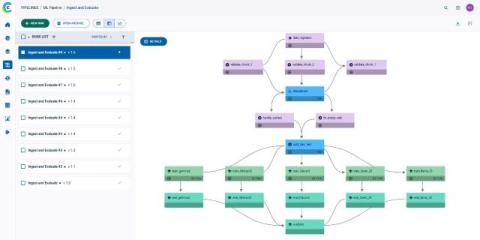
If you are working with ML models, having a reliable CI/CD (Continuous Integration and Continuous Deployment) workflow isn’t just a nice-to-have, it’s essential. Your team needs a robust, automated process to validate data, train models, and deploy them without human error slowing things down. That’s where ClearML comes in, offering a seamless solution to orchestrate, monitor, and automate your ML pipelines.

Your Enterprise Data Needs an Agent

Snowflake is expanding its AI capabilities with the public preview of Cortex Agents, to help retrieve data insights by orchestrating across structured and unstructured datasets. Cortex Agents streamlines agentic application data access and orchestration for more reliable AI-driven decisions by building on top of enhancements to our Cortex AI retrieval services.

Why AI Isn't Ready to Replace Developers

When it comes to AI, we’re focused on the wrong problems. On Test Case Scenario, we discuss the real challenges AI faces in software development: AI can churn out code, sure—but when it comes to maintenance, it’s dead weight. Collaboration over replacement: @Titus Fortner shares why AI isn’t your star coder—it’s your intern, and it needs constant babysitting. The real bottleneck? Writing code isn’t the hard part. It’s building tools that help teams actually understand and sustain their work.