Systems | Development | Analytics | API | Testing

Top Trends in AI for Federal Government

AI is emerging as an important tool for meeting the mission at federal government agencies. It can add efficiency and aid decision-making by: Many government agencies are already using AI processes. Below are some important use cases for AI in federal government: And that’s just a small sample of the ways federal agencies are using AI. Thousands more use cases have been identified related to national security, healthcare, transportation, and more.

Achieving Trusted AI in Manufacturing

In the dynamic landscape of modern manufacturing, AI has emerged as a transformative differentiator, reshaping the industry for those seeking the competitive advantages of gained efficiency and innovation. As we navigate the fourth and fifth industrial revolution, AI technologies are catalyzing a paradigm shift in how products are designed, produced, and optimized.

A Data-Agenda at Davos: Promoting the Promise of AI

In the buildup to this week’s World Economic Forum Annual Meeting in Davos, Switzerland, the talk of polycrisis becoming permacrisis painted a picture of impending doom. These terms have been used to describe the global condition today, citing the “cascading and connected crises” triggered by war and geopolitics, economic uncertainty, and environmental concerns, and their persistence.

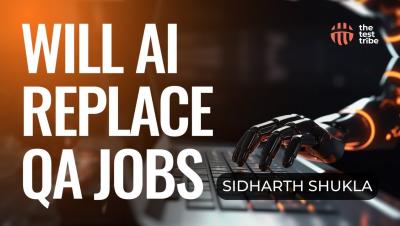
Is AI Going to Replace QA Jobs? | Sidharth Shukla | #softwaretesting #softwaretestingjobs #qajobs

In this thought-provoking video, Sidharth Shukla delves into the ever-relevant question of whether AI will replace QA jobs. Join him as he explores the nuances of AI's impact on the field of Quality Assurance, addressing concerns and shedding light on the evolving role of testers in an era of artificial intelligence.

Top 3 Healthcare and Life Sciences Data + AI Predictions for 2024

This year may be the most innovative on record. Recent advances in AI are beginning to transform how we live and work. And the potential impacts of artificial intelligence (AI) on the healthcare and life sciences industries are expected to be far-reaching. It’s essential for organizations to leverage vast amounts of structured and unstructured data for effective generative AI (gen AI) solutions that deliver a clear return on investment.

AI and Privacy: 3 Things Leaders Should Know for 2024

In the rapidly emerging artificial intelligence economy, organizations will split into two groups: those who are good at AI and those who are bad at business. Most experts agree that AI won’t replace humans, but instead augment us in a world of mixed autonomy. You’ll need new structures to harness AI’s transformative potential while managing its very real risks—the biggest of which is data privacy. So how can leaders handle AI and privacy risks?

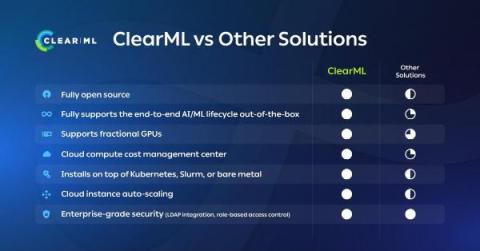
Easily Train, Manage, and Deploy Your AI Models With Scalable and Optimized Access to Your Company's AI Compute. Anywhere.

Now you can create and manage your control plane on-prem or on-cloud, regardless of where your data and compute are. We recently announced extensive new orchestration,scheduling, and compute management capabilities for optimizing control of enterprise AI & ML. Machine learning and DevOps practitioners can now fully utilize GPUs for maximal usage with minimal costs.

How Does AI Model Training Work?

The human brain is a prediction machine. It sees patterns, then makes predictions from previous experiences. This part of human intelligence has been critical to our survival. For example, many years ago, a forager might have eaten a particular berry, gotten sick, and thus learned the clues that indicate that a berry is poisonous. This would happen automatically—we’d get nauseous when seeing the berry again, which would make us steer clear.

Top Data + AI Predictions for the Public Sector in 2024

Governments collect more data than any other type of entity on the planet, yet their ability to use data to serve citizens more effectively has always been limited. Regulatory compliance, budgetary constraints, reliance on legacy systems and internal resistance to change all play a role. That’s why when it comes to adopting new technologies, public agencies tend to lag behind the private sector by 18 to 24 months—and often longer.