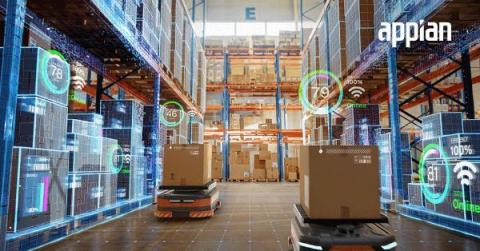
AI is a groundbreaking technology that is ready to modernize the way federal government agencies operate. By automating tasks and optimizing workflows, artificial intelligence (AI) promises to enhance efficiency, minimize errors, and boost productivity without adding resources.
Ready to implement generative AI in your business processes? Starting with the right generative AI use cases is key to your success. You’ll want to find areas where you can achieve quick wins as you grow toward your larger AI vision. In this article, we’ll highlight five use cases where you can incorporate generative AI for increased process efficiency.
Imagine you’ve just started a new job working as a business analyst. You’ve been given a new burning business question that needs an immediate answer. How long would it take you to find the data you need to even begin to come up with a data-driven response? Imagine how many iterations of query writing you’d have to go through. In this scenario, you also have reports that need updating as well. Those contain some of the biggest hair-ball queries you’ve ever seen.
Cloudera is launching and expanding partnerships to create a new enterprise artificial intelligence “AI” ecosystem. Businesses increasingly recognize AI solutions as critical differentiators in competitive markets and are ready to invest heavily to streamline their operations, improve customer experiences, and boost top-line growth.
Customer service is an art—and a science. It isn’t just a transactional function. It's also a relationship building activity that’s deeply tied to physiological responses in our brains. And the stakes are high: these interactions shape the neural architecture of customer loyalty. So can you use AI for customer service? Let’s explore that question.
The rise of generative AI (gen AI) is inspiring organizations to envision a future in which AI is integrated into all aspects of their operations for a more human, personalized and efficient customer experience. However, getting the required compute infrastructure into place, particularly GPUs for large language models (LLMs), is a real challenge. Accessing the necessary resources from cloud providers demands careful planning and up to month-long wait times due to the high demand for GPUs.
Adopting and deploying Generative AI within your organization is pivotal to driving innovation and outsmarting the competition while at the same time, creating efficiency, productivity, and sustainable growth. Acknowledging that AI adoption is not a one-size-fits-all process, each organization will have its unique set of use cases, challenges, objectives, and resources.