Systems | Development | Analytics | API | Testing

OpenAPI Schema Validation for AI

Schema validation ensures AI agents interact with APIs accurately by enforcing strict rules for requests and responses. OpenAPI provides a clear, machine-readable contract for APIs, reducing errors and improving reliability. This approach eliminates issues like ambiguous responses or schema drift, ensuring predictable behavior and secure data access.

Questions to Ask AI About Your Sales Pipeline and CRM Data

The right question returns a deal name, an owner, and a dollar value. The wrong one returns a framework about pipeline health. The difference is not the model, it’s how you ask. It’s 7:47am Monday. Your pipeline review starts at 8. You have thirteen minutes to find out which deals need attention, which reps are behind pace, and whether you’re actually going to hit the number this quarter.

The Claude Bill is Too Damn High #speedscale #claude #aiagents #aicoding #devops #llms

Stop overpaying for AI reasoning by trading expensive GPU cycles for efficient, deterministic testing. This video explores how tools like linters and traffic replay can complement Claude, helping you fix bugs more accurately while cutting token usage by up to 50%. Visit: speedscale.com to learn more.

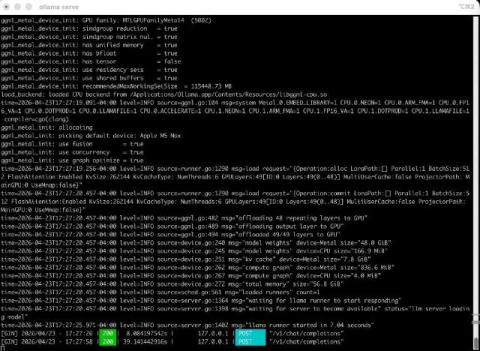
Run Local LLMs on Mac to Cut Claude Costs

Part of the motivation for this post is how cloud API economics are shifting: Anthropic is moving large enterprise customers toward per-token, usage-based billing (unbundled from flat seat fees), which makes “always call the API” a moving cost line for teams at scale. A hybrid or local layer is one way to keep spend bounded while you still use premium models where they matter.

Introducing Kong A2A and MCP Metrics: Visibility and Governance for AI Tool Adoption at Scale

Scaling LLM and agentic AI adoption from pilot programs to enterprise-wide deployments is a massive logistical rollout. As AI and agentic usage grow, so does a nagging question for leadership: **Are agents using the right tools to get the job done?** While raw infrastructure metrics might tell you if a server is "up," they fail to tell you if your AI investment is being leveraged.

Agentic Analytics in Practice: How AI Moves from Answering Questions to Closing the Loop

I spent years building dashboards that nobody used. Not because they were bad dashboards — they were actually pretty good. Clean visualizations, real-time data, all the metrics leadership said they wanted. But here’s what I learned: the problem was never the dashboard. The problem was the gap between seeing what happened and doing something about it. You look at a dashboard. It doesn’t act.

Data & AI Anywhere: Mastering Digital Sovereignty with Cloudera

Hey, did you know?... Cloudera's "anywhere" approach means *you* get to choose and control where you deploy your data and AI. Continue watching to hear how we make that possible. In this video, learn how Cloudera helps organizations maintain comprehensive control over their most valuable assets through three critical pillars: Chapters.

MCP in Production: Governing Agentic API Consumption | DeveloperWeek

As AI agents begin interacting with APIs, traditional API governance models need to evolve. In this DeveloperWeek session, Derric Gilling (WSO2) explains how organizations can manage and secure agent-driven API consumption using the Model Context Protocol (MCP). Unlike human applications, AI agents can generate large volumes of API calls from a single prompt. Without proper controls, this can lead to unexpected costs, security risks, and limited visibility into how APIs are being used.

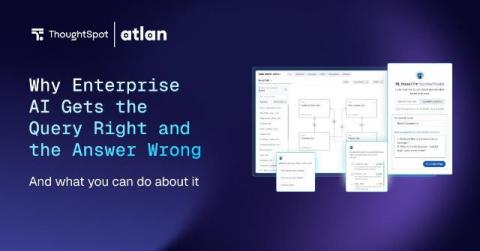
Why Enterprise AI Can Get the Query Right and the Answer Wrong

Most teams deploying AI agents on their data are watching the wrong things. They check whether the query ran and whether the number looks plausible. When both checks pass, the agent gets credit for a correct answer, and the output flows into dashboards, decisions, and the next agent in the chain. There's a gap between those two checks and actual correctness, and it's where the expensive mistakes live. Getting to a correct answer requires more than a formally valid calculation.