Systems | Development | Analytics | API | Testing

Perforce 2025 State of Data Compliance Report Reveals Confusion Around AI Data Privacy

MINNEAPOLIS, SEPTEMBER 30, 2025 - Perforce Software, the DevOps company for global teams seeking AI innovation at scale, announced the findings of the 2025 State of Data Compliance and Security Report. This comprehensive research reveals alarming trends when it comes to AI and data privacy, with mass confusion around the safety of sensitive data in AI model training and the frequency of data privacy exposure.
The Developer's Guide to Debugging AI-Generated Code

AI coding tools like ChatGPT, GitHub Copilot, and Claude have completely changed how we write software. From humble beginnings where non-AI-enabled code assistants made intelligent code suggestions, like Intellisense, the latest agentic tools can generate entire functions, suggest optimal algorithms, and even scaffold complete applications in minutes. However, as any developer who’s worked with AI-generated code knows, the output isn’t always perfect.

OctoPerf MCP Server

With the rapid rise of AI, the emergence of the MCP protocol reshaping human-machine collaboration, and testing tools like OctoPerf making their mark in the DevOps landscape, we’re clearly riding a new tech wave… and it’s got style. I wanted to dive into this project because it felt both fun and challenging. It was the perfect opportunity to explore what AI, the MCP protocol, and OctoPerf could really offer… and to see how far we could push the possibilities.

MCP Server in Testing: What It Means for You

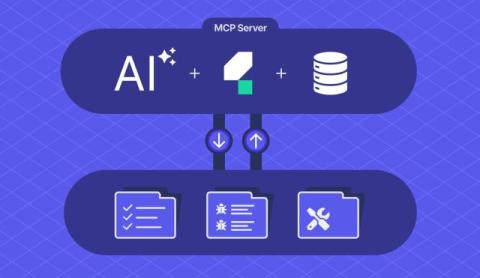
Teams use different tools in their software testing life cycle. The problem? Each tool has its own way of communicating. The MCP (Model Context Protocol) Server is a new approach to integrating these tools. It’s like a universal translator, so your testing tools, scripts, and AI copilots can share context without endless plugins or one-off integrations.

Accelerating and Scaling AI Deployments Across Hybrid Environments - MLOps Live #40 with Safaricom

Safaricom, one of the most AI-mature mobile operators, delivers predictive modeling and hyper-personalized financial services to millions of users. But operational challenges were slowing down deployments—limiting their ability to scale and act in real time. In this session, Safaricom’s AI team shares how they: Watch now to learn how they overcame bottlenecks, scaled faster, and unlocked real-time impact at massive scale with the Iguazio technology.

Agentic Automation in Testing: Scope, Benefits, and the Future of Autonomous QA

Traditional automation in software testing is beginning to show its limitations. Once regarded as the benchmark for speeding up QA, now struggles to keep pace with modern software development. Agile methodologies, DevOps practices, continuous delivery, and rapidly evolving user journeys require testing strategies that are more innovative, quicker, and adaptable.The challenge? Old automation frameworks still lean too much on people. They rely on fixed scripts, constant maintenance, and manual oversight.

PII Sanitization with Kong

Using sensitive user data for analytics, development, or training AI models introduces significant security risks like data breaches and costly PII (Personally Identifiable Information) leakage. These incidents can lead to heavy fines and a critical loss of customer trust. Watch this demo to see how the Kong AI Gateway automatically finds and sanitizes PII in real-time before requests ever reach your upstream services or Large Language Models (LLMs).

How To Make Sense of Enterprise-Level Data With Google Cloud's Vertex AI and BigQuery

As an application developer integrating analytics into your application, your users expect a scalable, flexible solution that adapts to changing business needs. While organizations strive to capitalize on new AI tools, they’re also still wrestling with big data: massive, fast-moving datasets that traditional tools can’t handle easily.

Best Practices to Develop, Deploy, and Manage Gen AI Copilots

Generative AI copilots are moving from experimental tools to core enterprise solutions. But too often, organizations rush into development, only to discover adoption stalls because the copilot doesn’t solve a specific user problem, lacks trust safeguards, or can’t scale reliably. This guide lays out best practices across the entire lifecycle, from planning and building, to deployment, monitoring, and long-term maintenance.