Systems | Development | Analytics | API | Testing

Copilot vs Cursor: A Complete AI Coding Assistant Comparison

Coding with artificial intelligence is not just a nice-to-have; AI applications in computer programming are becoming integral to modern computer programming workflows. Presently, two primary applications dominate the discussions in this area: GitHub Copilot and Cursor AI. While both applications provide faster coding times and fewer bugs, fewer bugs, and smarter code, they offer such features in extremely different ways.

The Rise of AI-Driven Performance Engineering

There’s a particular kind of exhaustion that comes with traditional performance testing. You spend weeks building perfect load scenarios, run them overnight and wake up to a wall of red in your monitoring dashboard. Half your day disappears into log files, trying to piece together what went wrong. And just when you think you’ve got it right, a minor UI update breaks everything and you’re back to square one. If this sounds familiar, you’re not alone.

Cloud API Keys vs Resource-Specific API Keys in Confluent Cloud

As you build and manage data streams in Confluent Cloud, securing your interactions with its APIs is paramount. Confluent Cloud offers two types of API keys that manage authentication to the different APIs in Confluent Cloud: cloud API keys and resource-specific API keys. Each has its own distinct characteristics and use cases.

Best Practices for AI in CI/CD QA Pipelines

AI transforms CI/CD testing from reactive bug detection into proactive quality assurance that accelerates release cycles while improving software reliability. Start embedding AI into your testing workflows now because teams that wait will struggle to match the velocity of competitors who already have. Continuous integration and continuous deployment pipelines have become the backbone of modern software delivery.

Building Secure AI Agents with Kong's MCP Proxy and Volcano SDK

Modern AI applications are no longer just about sending prompts to an LLM and returning text. As soon as AI systems need to interact with real business data, internal APIs, or operational workflows, the problem becomes one of orchestration, security, and control. The challenge is to build secure AI agents without embedding fragile logic or exposing sensitive systems directly to a model. This is where a layered architecture using Volcano SDK, DataKit, and Kong MCP Proxy becomes compelling.

What is an MCP? Breaking Down the Model Context Protocol

70% of teams are already integrating generative AI tools into their daily workflows, according to our 2025 State of Game Technology Report. Now more than ever, teams are looking to connect their AI tools to the services and applications they rely on to get work done. To address this issue, the industry has begun to standardize using the Model Context Protocol (MCP) to connect their existing tools and LLMs like Claude, GPT, and Gemini.

AI in QA: What leading quality experts want every team to know

Our goal with the Tricentis blog is to distill insights that help QA professionals navigate the massive, AI-driven transformation happening across the software delivery landscape. To that end, I reached out to experts across Tricentis, from product and services to marketing and strategy, to hear what they’re really thinking about AI in QA right now. This group brings decades of experience building testing products, guiding enterprise transformations, and shaping how organizations adopt AI.

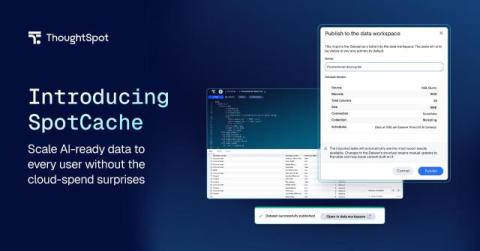
SpotCache: Scale AI-ready data without cloud-spend surprises

AI is changing how work gets done. But for many data leaders, it’s also creating a new challenge: managing the cloud bill. As more people (and more AI agents) query data, cloud data warehouse (CDW) spend can spike fast. Costs become harder to predict, and teams end up making tradeoffs—scaling AI insights or staying within budget. That tension creates a real bottleneck on the path to becoming AI-ready.

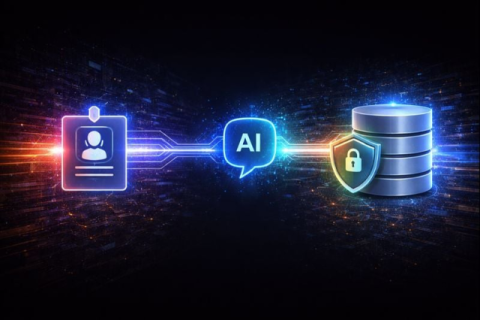
Identity Passthrough for AI: Why Your LLM Needs to Know Who's Asking

When a user asks your AI assistant a question, who actually runs the database query? In most enterprise AI deployments, the answer is troubling: a shared service account with broad access to everything. The user's identity evaporates the moment their request enters the AI system. This architectural pattern creates security gaps, compliance failures, and data leakage risks that undermine enterprise AI adoption.