Systems | Development | Analytics | API | Testing

Why data integrity is essential for transportation and logistics companies providing realtime updates

With the rise of online ordering and the growth of delivery, consumers and businesses alike order more packages, expect them faster, and want rapid updates on progress, delays, and changes. Companies providing transportation and logistics services, then, have a compelling reason to add realtime update features to their apps. In other articles, we’ve talked about the broad challenges transport and logistics companies face when providing realtime updates, including scalability and low latency.

Implementing MLOps: 5 Key Steps for Successfully Managing ML Projects

MLOps accelerates the ML model deployment process to make it more efficient and scalable. This is done through automation and additional techniques that help streamline the process. Looking to improve your MLOps knowledge and processes? You’ve come to the right place. In this blog post, we detail the steps you need to take to build and run a successful MLOps pipeline.

3 Top Process Compliance Challenges and How to Solve Them

Technology is an indispensable ally for navigating process compliance challenges with confidence. That’s because as digitization expands and regulatory requirements change, process compliance becomes more and more difficult to address manually. In this blog post, we’ll examine common process compliance challenges and how technology can help solve them. The most significant challenges for process compliance are manual and paper-based systems.

Top 60+ Software Testing Interview Questions & Answers 2023

Interviews are generally anxiety-inducing, but as long as you have some solid preparation before you enter the interview room, there is nothing to worry about. In this article, we have prepared top 60 software testing interview questions, each with detailed answers and explanations, for you to consolidate your knowledge in the field. Our questions are carefully selected and categorized into 3 sections: Beginner level - Intermediate level - Advanced level.

Turbocharge Your Test Automation With Katalon and GenRocket

When doing testing automation, it is extremely critical to be able to perform data-driven testing. Data-driven testing (DDT) at the test case level allows you to add one or more data files and manage data binding at the test case level. The most common approach is to provide an Excel or CSV file as input to the test case. The file is modeled per test case structure and then populated with different datasets.

How to Resolve ChatGPT Rate Limit Errors

Ever get overwhelmed by a chatty best friend asking a lot of questions? That's what the ChatGPT API "Over the Rate Limit" error is like. It's telling you, "Woah, slow down! Let me take a sip of water before we continue." In this guide, we will shed light on the rate limit and show you several ways to make your API requests more efficient to ensure you face as few interruptions as possible.

SOLID Design Principles Explained: Dependency Inversion Principle with Code Examples

The SOLID design principles were promoted by Robert C. Martin and are some of the best-known design principles in object-oriented software development. SOLID is a mnemonic acronym for the following five principles: Each of these principles can stand on its own and has the goal to improve the robustness and maintainability of object-oriented applications and software components.

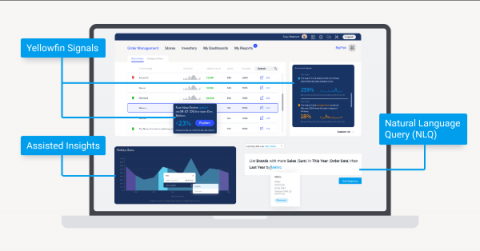
How Yellowfin Self Service Analytics Helps Automate Data Insights

For our regular readers at Yellowfin, the role of self-service analytics in today’s organization is more than clear. This type of analytics is aimed at helping more people across the company access, analyze and understand their business data, so they can make data-led decisions.

Cloud cost management: How to optimize and control cloud expenses

It’s no surprise that cloud spending is rapidly increasing, so it’s also no surprise that controlling those rapidly increasing cloud costs is a top priority for business, technology, and data leaders. According to Gartner, the use of public cloud computing has increased IT spending for most organizations (54%) over the last three years, with only 29% reporting that the cloud decreased IT spending.