Systems | Development | Analytics | API | Testing

AI in Fitness: How Artificial Intelligence Helps FitTechs Grow?

Ever wondered if your fitness app actually knows you, or just logs your steps? Is it really smart enough, as smart as you think it is? Is it helping you train smarter, recover better, or just ticking off numbers on a screen? AI-powered fitness apps are quickly moving beyond basic tracking. They’re becoming intelligent companions, even those that understand your body, goals, and limits.

When To Use A List Comprehension In Python

To be honest, most Python developers are not using list comprehensions. Even I, who is writing this blog, never used list comprehensions before. But when I saw some examples, I felt I had to try and use them in my Python code. The reason for this change of mind is that there are a few advantages we get if we implement list comprehensions. Let’s see what these are in this blog today.

When AI writes code that humans wouldn't: Testing in the age of agentic coding tools

Agentic coding tools like Cursor, GitHub Copilot, and OpenAI’s Codex are reshaping how software is developed. They enable developers to offload routine tasks and accelerate feature delivery. However, these tools also introduce new challenges – particularly in how we test and validate the code they produce.

What Is API Gateway Federation? A Guide to Centralized API Management

API gateway federation refers to the integration and management of multiple API gateways within a unified control plane. This approach allows organizations to use different API gateways, which may be from various vendors or tailored to specific environments (e.g., cloud-based, on-premises), while centrally managing their configurations, policies, and monitoring. Figure 1: API gateway federation with a unified control plane.

Compliance is Everyone's Job: How to Automate Your Headaches Away

Another day, another API. Fueled by AI-assisted coding and agile workflows, the speed of innovation has never been higher. But for the compliance team? It’s panic mode. Every new API must follow a minefield of internal rules: security protocols, naming conventions, reuse policies, documentation standards. And while the dev team is flying forward, compliance is stuck doing manual reviews, chasing specs, and untangling inconsistencies often after the code is already written.

Rethinking the Economics of Agentic AI: When 'Cheap' Gets Complicated

Everyone thinks AI is getting cheaper. But is it really? At first glance, the economics of AI seem to be improving for everyone. Thanks to continued model optimization and advances in hardware, the cost of running LLMs (also known as inference) is steadily decreasing. Developers today can access incredibly powerful models at a fraction of what it cost just a year ago. But there’s a catch.

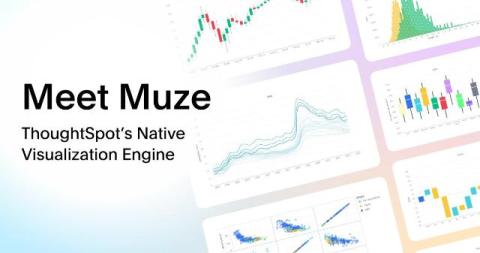
Meet Muze: ThoughtSpot's native visualization engine

Business intelligence platforms analyze vast amounts of data, requiring visualization engines that balance performance, flexibility, and ease of use. Traditional charting libraries treat each chart type as a distinct entity, requiring separate logic and code for each. This approach leads to code duplication, limited reusability, and reduced maintainability. Additionally, it’s cumbersome to effectively layer or combine visual elements due to these libraries’ rigid composability.