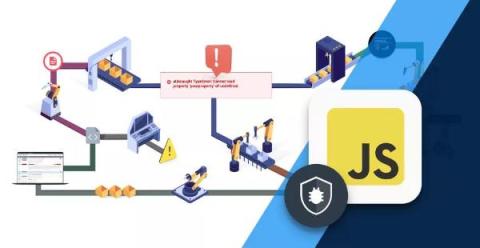
Software ships faster than ever, but speed introduces risk without the right crash monitoring and error reporting tools providing visibility into what happened, why, and how to fix it.
Exceptions are inevitable. It’s how we deal with them that matters. An effective exception handling regime is the difference between an app that only works in sandbox and one that can adapt and scale in the real world. JavaScript can throw up all kinds of weird and wonderful exceptions, because it runs in inherently unpredictable environments. So we’ve put together this guide to give you a clear, repeatable plan for handling them.
Enterprise Spring Boot APIs should be tested at three levels: unit tests for business logic, integration tests for external service behavior, and traffic replay for production edge cases. Most teams only do the first. This guide shows all three using a real Spring Boot application that calls external APIs (SpaceX, US Treasury) with JWT authentication. The kind of service that looks simple in development and breaks in production.
Production bugs that only reproduce in actual traffic can be some of the most frustrating bugs in software development. You can stare at your logs, add traces to your code, add instrumentation – and still not be able to see the actual requests that went over the wire. And that gets even harder when the requests are encrypted and the system is a black box. You can use tools like Wireshark or Kubeshark to capture the requests.
If you’re a mobile developer running builds on Jenkins, you already know the drill: a flaky agent goes down on a Friday afternoon, your Xcode version is three months behind, and the DevOps engineer who set the whole thing up left six months ago. The builds ship eventually - but at what cost? Jenkins is a powerful, battle-tested automation server. For teams building web backends or managing complex polyglot pipelines, it earns its place.
AI is reshaping how software gets built, tested, and delivered. For quality engineering teams, AI agents promise extraordinary acceleration by automating analysis, executing tests, generating assets, and orchestrating tasks across the SDLC. But when enterprises begin experimenting at scale, new challenges appear. Where are these agents running? What exactly are they doing? Who approves their decisions? How do we govern them safely?
Queues for Kafka is now in General Availability (GA) on Confluent Cloud and is coming soon to Confluent Platform, coinciding with the Apache Kafka 4.2 release. This milestone brings production-ready queue semantics and elastic consumer scaling natively to Kafka through KIP-932, enabling organizations to consolidate their messaging infrastructures while gaining elastic consumer scaling and per-message processing controls. Get started.
Enterprise payment systems are at a breaking point: rising volumes, tighter margins, and ever-more sophisticated fraud are pushing traditional automation to its limits. The AI-enabled payments market was valued at $38.36 billion in 2024 and is projected to grow over the next decade. As firms seek smarter, real-time decisioning and risk control, highlighting how indispensable AI has become in payment stacks today. -
We’ve all been there. When engineering teams evaluate AI-powered QA tools, the same questions come up again and again. Some are rooted in genuine technical curiosity. Others stem from experiences with earlier-generation tools that earned a healthy dose of skepticism. After hundreds of these conversations, I’ve identified the seven most common misconceptions. Contents Toggle.
Every successful PropTech product combines accurate data with thoughtful engineering. This is the goal of the partnership between ORIL and BatchData. The BatchData platform provides extensive U.S. property data and predictive analytics. ORIL uses this data to design and build practical, production-ready real estate platforms.