Systems | Development | Analytics | API | Testing

Track Errors in Your Python Django Application with AppSignal

In this post, we will specifically look at using AppSignal to track errors in a Django application. We'll first create a Django project, install AppSignal, introduce some faulty code, and then use the AppSignal Errors dashboard to debug and resolve errors. Let's get started!

Announcing Insomnia's New Storage Control To Mandate Local-Only, Cloud, or Git Storage for APIs in the Organization

Today we’re excited to announce that Kong Insomnia has shipped Storage Control, a new enterprise capability that allows administrators in an Insomnia organization to mandate what type of backend storage developers are allowed to use when creating API assets like API collections, API specifications, environments configuration, authentications data, and more.

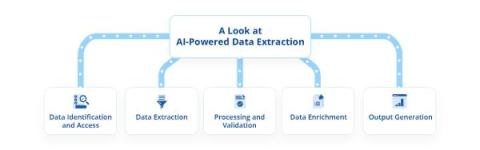
Transcript Processing with AI-Powered Extraction Tools: A Guide

The class of 2027 saw a massive influx of applications at top universities across the United States. Harvard received close to 57,000 applications for the class of 2027, while MIT received almost 27,000. UC Berkeley and UCLA, meanwhile, received 125,874 and 145,882 respectively. Manual transcript processing is an uphill battle for educational institutions at every level.

Automating ETL Tasks Effectively with Choreo

Connecting multiple systems and exchanging data among them is afrequent requirement in many business scenarios. This typically involves one or many source systems, an intermediary processor, and one or many destination systems. Some organizations invest in purpose-built solution suites such as Data Warehouse, Master Data Management (MDM), or Extract, Transform, Load (ETL) platforms, which, in-theory, cover a wider spectrum of requirements.

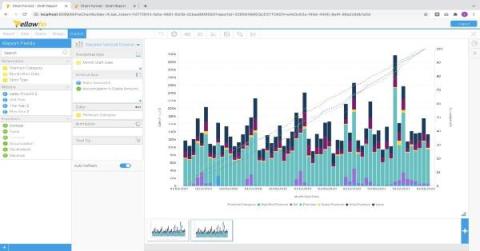
How to Create Big Number and Vertical Column Charts in Yellowfin

Welcome back to Yellowfin Japan’s ‘How to?’ blog series! In our previous blog, we went through how to capture data using Yellowfin's Data Transformation flow, and the preparation and steps for creating reports using Yellowfin View. It may seem like a lot of simple work, but as the number of reports to be created increases, the importance of data preparation becomes far more apparent. So, what about after you’ve done all the setup? Well, it’s now time to create reports!

Creating a Private API Gateway: Steps and Considerations

In this article, we’re diving deep into the nuts and bolts of creating a private API gateway. From the initial installation to securing your API with keys and roles, we’ll walk you through every step of the process. Whether you’re looking to connect to a Microsoft SQL Server database or any other popular database, DreamFactory makes it a breeze, automating the tedious parts and letting you focus on what matters most: your data.

Snowflake vs BigQuery | Key Differences & How to Choose

When it comes to cloud data warehousing, the choice between Snowflake vs BigQuery is crucial for businesses that rely on big data analytics for decision-making. Snowflake, known for its flexibility and ease of use, contrasts with BigQuery, Google’s fully-managed, serverless data warehouse that excels in speed and scalability. Understanding the main differences between these two platforms is essential for selecting the right solution that aligns with your data strategy and operational needs.

5 AI Capabilities Your Business Needs

Prior to 2022, a lot of the AI news centered on use cases like self-driving cars. Of course, use cases like these didn’t exactly apply to enterprise software. In 2023 ChatGPT showed the abilities of AI to mimic human language, but still, this only scratched the surface of AI applications for the modern enterprise. If you’ve ever asked yourself, “What is AI capable of?” then consider the following examples: How many emails do you get per day?

Data Product Manager Essentials: Unleashing Innovation and Growth

Just a couple decades ago, human resource departments didn’t look for data product managers. The job didn’t exist because organizations rarely needed professionals to oversee data products and the teams that build them. They might have employed data scientists, but they didn’t need people focused on management more than they focused on data.