Systems | Development | Analytics | API | Testing

How to Use AI for Customer Service

Customer service is an art—and a science. It isn’t just a transactional function. It's also a relationship building activity that’s deeply tied to physiological responses in our brains. And the stakes are high: these interactions shape the neural architecture of customer loyalty. So can you use AI for customer service? Let’s explore that question.

How to Set Up Amazon Aurora PostgreSQL

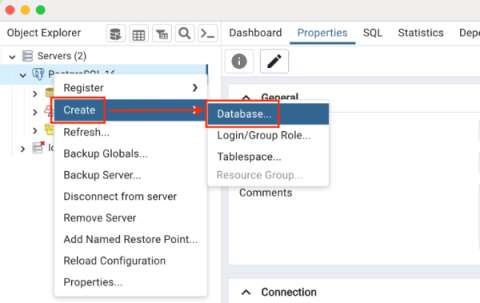
Amazon Aurora PostgreSQL represents a significant leap forward in database technology, skillfully combining the innovation of Amazon’s cloud capabilities with the reliable framework of PostgreSQL. It's not merely a database; it's a solution designed for the cloud, promising high performance, availability, and compatibility with PostgreSQL. This guide aims to walk you through the setup process comprehensively.

How To Capture Data using Yellowfin Data Transformation Flow

In our previous How to Design a Dashboard in Yellowfin: Part Two article, the Yellowfin Japan Team covered how to design a complete image of a dashboard, from start to finish, in our visual-based canvas interface. In this article, the team will demonstrate the necessary process to create the final dashboard.

Announcing Cloudera's Enterprise Artificial Intelligence Partnership Ecosystem

Cloudera is launching and expanding partnerships to create a new enterprise artificial intelligence “AI” ecosystem. Businesses increasingly recognize AI solutions as critical differentiators in competitive markets and are ready to invest heavily to streamline their operations, improve customer experiences, and boost top-line growth.

Our architectural approach to support multi-product strategy

Databox is mostly known for its business analytics and visualization capabilities. As a single-product company for the majority of its existence, it was developed in a way that catered to just one product. As the company began its path as a startup, it was convenient to keep the architecture simple and flexible to quickly adapt to change and align direction if needed to ensure business success.

The Best On-Premises Software Options for Businesses

On-premises software is stored on local machines, such as desktop computers or servers, so people connected to a network can access critical features. Within an enterprise context, on-premises software almost exclusively exists on on-site servers that multiple employees can access. You might already know that many business leaders want to embrace cloud strategies.

Cybersecurity Considerations for In-Vehicle Infotainment Systems

The focus of today’s new-car buyer centers more on the “Digital Cockpit ecosystem experience” and less on the traditional features, such as horsepower and fuel economy. The automotive industry has made it a priority to deliver that experience with fully connected in-vehicle infotainment (IVI) systems of touchscreen displays, voice commands, and integrated information and entertainment functions.

Graphql vs Rest: A Comprehensive Comparison

The conversation around data fetching and API management is increasingly dominated by two major players: GraphQL and REST. These technologies, while serving the same purpose of facilitating communication between client and server, offer markedly different approaches and philosophies. GraphQL, emerging as a powerful alternative to the traditional RESTful architecture, brings a new dimension to data retrieval efficiency and flexibility.

Kong Konnect the World: Seamless Global and Serverless Deployments Powered by Koyeb

Kong Konnect is an API lifecycle management platform streamlining the connectivity between your APIs and microservices. The control plane is hosted in the cloud by Kong and available across the US, EU, and AU, while the data plane is managed by you within your preferred network environment, like Koyeb.

LiveRamp Customers Build 'Foundation of Identity' With Snowflake Native Apps

The best marketing is truly data-driven, creating powerful product promotions and offers through an understanding of customer needs and preferences. But for many organizations, building this understanding is more akin to solving an ever-growing jigsaw puzzle (with no easy edge pieces!) than reading data insights from a beautiful dashboard.