As the field of software development continues to evolve, one cannot help but wonder about the future of the profession. With the integration of AI tools, like ChatGPT, and Machine Learning, tasks that were once exclusive to human developers are now being handled by machines. While this has the potential to greatly increase efficiency and productivity, it also raises important questions about the future of the developer profession. How will developers adapt to this new reality?
The most successful organizations today know they need to use business analytics to make decisions and drive outcomes. Often, however, these decisions must be driven by insights that can remain hidden in data. That’s where data mining comes into play. Data mining is a powerful tool to help extract meaningful insights from even the largest, most complex data sets.
It began with the pandemic. Consumer spending shifted from experiences to goods, spiking demand. Ports clogged due to shutdowns. Factories operated at reduced capacities from sickness, lockdowns, or even infrastructure issues like rolling blackouts. But it didn’t end there. The ripple effects have continued. Supply chains continue facing upheavals, particularly with respect to inflated prices and global conflict like the war in Ukraine. This leaves supply chain professionals on shaky ground.
“If you don’t care about quality, you can meet any other requirement” Gerald M. Weinberg Software testing has never been a walk in the park. It demands expertise in software development, users’ behavior, the software under test architecture, stakeholders’ requirements, and programming knowledge. Quality teams know firsthand how challenging it is to ensure software quality when its architecture is becoming more complex and teams are releasing at a pace faster than ever.
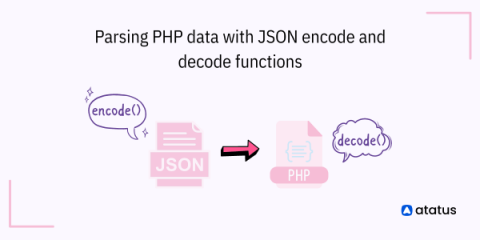
PHP is a powerful backend developer language. In fact, it is the most used server-side scripting language today. There is a lot of coding that goes behind building a successful website. And all these work on data. The I/O commands written on a disk forms the data, and the resource material you’ve already embedded becomes data. Data can be written in any format - as a string, object, or array.
cURL is a PHP library and a command-line tool that enables us to receive and transmit data utilizing URL syntax. It can transmit data in a wide range of forms, including HTTP posts, HTTP gets, FTP uploads and downloads, cookies, SOAP requests and responses, and so forth. Engaging a web server with this PHP extension may entail the most appropriate data which can be retrieved in the webpage database.
Everything you need to know about the top 15 data integration tools of 2023.