Systems | Development | Analytics | API | Testing

AI in Software Testing: Key Trends to Watch in 2025

Software development is a dynamic field that needs reliable and effective testing practices. Artificial Intelligence (AI) is poised to revolutionize software testing services in this dynamic environment. As 2025 draws near, AI is set to transform quality assurance (QA) by automating processes, increasing accuracy, and boosting software quality in general. In this blog article, the leading AI developments in software testing for 2025 are examined.


From Machine Learning to AI: Simplifying the Path to Enterprise Intelligence

For years, Cloudera’s platform has helped the world’s most innovative organizations turn data into action. As the AI landscape evolves from experiments into strategic, enterprise-wide initiatives, it’s clear that our naming should reflect that shift. That’s why we’re moving from Cloudera Machine Learning to Cloudera AI.

Orchestrated Service Virtualization: The Definitive Guide

Software development requires a lot of things to be highly optimized due to the sheer number of parts and the interconnected nature of those parts. Making your service seamless, efficient, and scalable requires tooling that is itself seamless, efficient, and scalable. As organizations have moved to adopting microservices and distributed cloud-native solutions, being able to effectively scale resources and the systems which operate upon those resources has been made even more critical.

Predictions 2025: AI as Cybersecurity Tool and Target

Though AI is (still) the hottest technology topic, it’s not the overriding issue for enterprise security in 2025. Advanced AI will open up new attack vectors and also deliver new tools for protecting an organization’s data. But the underlying challenge is the sheer quantity of data that overworked cybersecurity teams face as they try to answer basic questions such as, “Are we under attack?”

Top PostgreSQL Database Free Tiers in 2025

Looking for a managed PostgreSQL database with a free tier? We've got you covered. In this article, we'll explore the top PostgreSQL databases with free tiers to use for your applications in 2025. These free-tier options are perfect for side projects, MVPs, and learning how to use cloud databases. All these database solutions integrate with Koyeb, enabling you to seamlessly connect databases hosted by third-party providers to your applications running on the Koyeb platform.

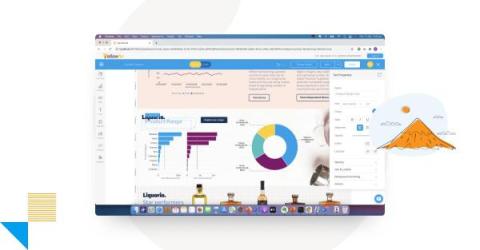
How to Create a Dashboard in Yellowfin: Step-by-Step Guide

Welcome to the final entry in Yellowfin Japan’s long-running ‘How to?’ blog series! This series of blogs has aimed to to provide your team with a step-by-step guide of how to create your own Yellowfin dashboard, starting from the design and data transformation flow, all the way to creating rich data visualizations and using the right report filters.

How Honeybadger migrated from Sidekiq to Karafka

Background tasks are one of the core pillars when considering web applications for scale. The basic idea is simple: A client makes a request to your web application and in handling that request, your app performs several time-expensive tasks. To allow it to respond to the client faster, the app enqueues a background job to a background processing system. The background processing is then tasked with all the heavy lifting, like computations or I/O operations.

Stop Treating Your LLM Like a Database

This article was originally published on The New Stack on Dec. 19, 2024. Imagine driving a car with a headset that only updates your view every five minutes instead of providing a continuous video stream. How long would it take before you crashed? While this type of batch processing clearly doesn’t work in the real world, it's how many systems operate today. Batch processing, born out of outdated technology constraints, forces applications to rely on static, delayed data.

How to Implement Secure Access Control with OPA and Kong

Ensuring secure access to applications and APIs is critical. As organizations increasingly adopt microservices architectures and cloud native solutions, the need for robust, fine-grained access control mechanisms becomes paramount. This is where the combination of Open Policy Agent (OPA) and Kong Gateway shines.