Systems | Development | Analytics | API | Testing

Sauce Acquires API Fortress; Adds API Testing Capabilities

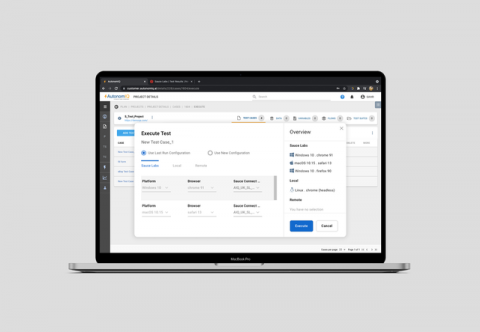
By now you may have seen the news that Sauce Labs has acquired API Fortress, a leading provider of modern API testing solutions for agile and DevOps teams. This is an exciting milestone for us, and we are thrilled to welcome the capable API Fortress team into the Sauce Labs team! Here, I’d like to go into a bit more depth on why we did this acquisition and what this will mean for our customers.

ACTION REQUIRED: Secure Your Testing Experience - Best Practices for Updating Sauce Connect

Sauce Labs provides a number of features that help secure your testing experience and ensure that your data and applications are safe while using our cloud platform. One of the most popular features is Sauce Connect Proxy—a built-in HTTP proxy server that opens a secure "tunnel" connection for testing between a Sauce Labs virtual machine or real device and a website or mobile app hosted on your local computer ("localhost") or behind a corporate firewall.

Leveraging Docker Containers to Manage Sauce Connect Tunnels

Sauce Connect Proxy™ is a built-in HTTP proxy server that opens a secure "tunnel" connection for testing between a Sauce Labs virtual machine or real device and a website or mobile app hosted on your local computer ("localhost") or behind a corporate firewall. It provides a means for Sauce Labs to access your application or website.

Why Product Managers Should Care About Testing

A product manager’s job first and foremost is to deliver value to their customers with the products they oversee. In order to ensure quality, those products need to be tested. Testing before release in a well thought-out manner gives product managers the confidence to create and execute high quality products and user experiences.

How To Do Multi-Touch Gestures in Live Testing

Many organizations are working toward digital confidence by optimizing their testing practices. This may look like reconfiguring the delivery pipeline to integrate quality more meaningfully, moving test infrastructure to the cloud, and automating an increasing number of test cases. While all of these are helpful steps on the road to achieving digital confidence, some use cases might not benefit from more automated testing.

Quickstart to Automated Functional Testing with Visual Testing

You have decided to add the power of Selenium automated testing to your testing strategy, but are overwhelmed with how much learning is involved. The Selenium automation framework can be intimidating, and getting started with little to no experience can be a massive undertaking for any organization. The good news is that there is a great way to get started with automated functional testing and it’s not what you would expect: visual testing!

1 Simple Trick To Massively Improve Automation Efficiency

Automated UI testing is a daily struggle for efficiency and reliability. A single misconfigured line of code can cost teams in hours of lost feedback time and test error triaging—potentially costing companies hundreds of thousands of dollars. In this case study we will see how interactions with only two web elements led to a 34% degradation in the test execution time.

Parallelize Your JavaScript Tests In CI/CD

This spring, Sauce Labs announced the Sauce Testrunner Toolkit (beta) to expand developer-first capabilities and support for native JavaScript frameworks. The Testrunner Toolkit makes setting up, writing, and running web tests easier and faster for developers during early pipeline testing. First it supported Puppeteer, followed by Cypress, TestCafe, and Playwright to provide the flexibility to test the way you want, along with Sauce Labs insights, at scale.