We collect the latest Development, Anaytics, API & Testing news from around the globe and deliver it direct to your inbox. One email per week, no spam.
New capabilities remove barriers to production-ready AI applications with agent-powered workflows, automated data protection, and private cloud connectivity.
This is Part 2 of the AI Software Factory series. In Part 1, we established that the Agile methodology is buckling under the weight of “elastic code.” When AI agents can generate functionality in seconds, two-week sprints and manual task management become organizational bottlenecks. We introduced the concept of the AI Software Factory: a shift from managing human tasks to managing business intent through a “Funnel of Increasing Trust.” But a factory requires infrastructure.
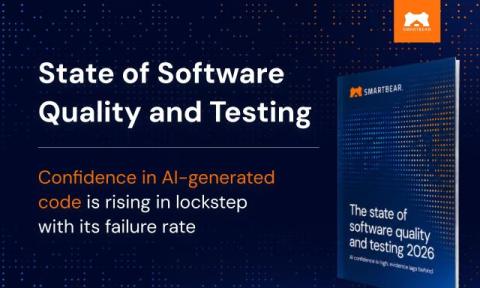
While AI accelerates development velocity by a factor of ten, a critical consequence remains: testing hasn’t kept pace. According to SmartBear research, 70% of software professionals report that their application quality has already degraded due to AI-accelerated development. Even more concerning, 60% have experienced quality issues in the past year as development velocity outstrips testing capacity.
You turned on an AI feature in your analytics tool. It surfaced an insight about your pipeline. You looked at it, paused, and closed the tab because you weren’t sure the number was right. AI-ready data would have made you forward it instead. It’s data that is clean, structured, and governed consistently enough that an AI model can reason about your metrics without a human translating or reconciling them first.
Every analytics vendor claims AI. Few can prove their AI is doing real analytical work. Here is what executives need to verify before committing budget to an AI-powered analytics tool.
Relying on AI and interns to build custom traffic replay tools is a scalability nightmare that introduces security risks, brittle code, and massive maintenance costs...use Speedscale instead. Learn more: speedscale.com.
The challenge of any aerospace company is to deliver new capabilities without compromising safety, reliability, or precision. At our current juncture, legacy technology runs into conflict with modern tool stacks. Artificial intelligence (AI) creates fissures in compliance and auditability, and innovation and productivity gains come at a cost of greater complexity. Despite these seismic shifts, the central question remains the same.
“Garbage in, garbage out.” We are not the ones who said this, George Fuechsel did. But when we are talking about AI today, it is hard not to repeat it. We spend a lot of time discussing what AI can do, the outputs, the predictions, the impact it can create. Much less attention goes to what is actually going into these systems.
What happens when your AI system stops responding in the middle of a critical decision? This demo shows how organizations run AI inference for real-world applications like pneumonia detection to: See how Cloudera AI Inference Service enables teams deploy and monitor multiple models with full control, predictable costs, and no dependency on external APIs, so mission-critical AI keeps working when it matters most.