Systems | Development | Analytics | API | Testing

Ep 97 | AI Agents Move Fast. Who's in Control?

One developer burned through 300 million AI tokens in a single week. The payoff was far less impressive. For Todd Trevillion, it's a striking example of what can happen when AI adoption outpaces the controls needed to manage it. And with autonomous AI agents beginning to make decisions on behalf of businesses, the stakes are getting higher.

What IT Buyers Need to Know Before a Mainframe Refresh

Most mainframe storage refreshes begin with a notice. A support statement gets revised, a lifecycle date is published, a lease comes due, or a capacity report shows the estate crossing a threshold two years earlier than anyone planned for. A purchase that had been sitting comfortably in a future budget cycle now has to close in this one. Under deadline pressure, the instinct is to buy the current generation of the platform you already run.

Why Enterprise AI Context Lives in People's Heads, and How to Fix It

Why does context always seem to live in people's heads in enterprise organizations? According to Jessica Talisman, author of The Ontology Pipeline and founder of Contextually LLM, the answer is that organizations have invested heavily in data management for decades — and almost nothing in knowledge management. In this clip from Day 1 of our Semantic & Context Layer Series, Jessica joins Jane Smith and Sonny Rivera to untangle the terminology confusion around semantic layers, context layers, and memory and explain why the gap between data and knowledge is exactly where AI answers break down.

Cautionary Tales from the Age of AI

Can AI agents actually fix production Kubernetes clusters, or are we just trapped in flashy AI marketing hype? In this Cloud Native Budapest session at Cloudera, Yurii Palamarchuk (Cloudera) breaks down why most AI demos fail in production, and Péter Megyesi shares how autonomous AI agents (Claude Code, kubectl) resolved a complex 6-year-old Ceph & Kubernetes outage.

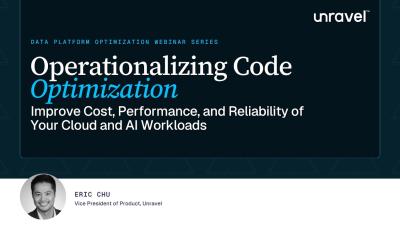
Operationalizing Code Optimization

Operationalizing Code Optimization to Improve Cost, Performance, and Reliability of Your Cloud and AI Workloads While infrastructure optimizations like rightsizing and auto-suspending idle resources are standard practice, they cannot solve the cost and performance issues caused by inefficient code. Unoptimized workloads and AI functions waste compute resources, lead to missed SLAs, and significantly inflate cloud spend.

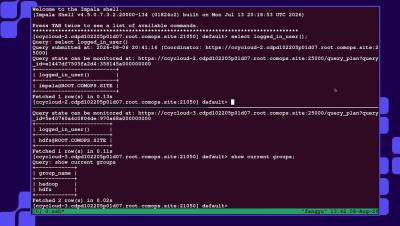
Cloudera Impala Demo: Delegated Admin for SQL-Based Access Management

See how Cloudera Impala's Delegated Admin for SQL-Based Access Management helps enterprises decentralize access management, reduce IT bottlenecks, and streamline data access administration. This demo shows how delegated administration enables authorized teams to manage access through SQL, reducing reliance on centralized IT administrators and manual UI-based processes.

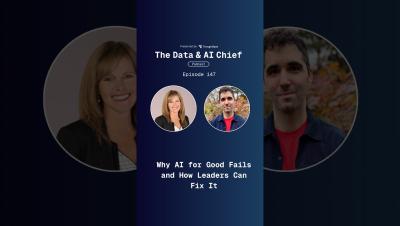
Data Chief Social 2 9x16 1

Even well-designed algorithms can fail and end up hurting the people they're meant to help. In this episode, Dr. Ben Green, Assistant Professor of Information and Public Policy at the University of Michigan, explains what keeps data from being used for good, why AI regulation can't be left to AI companies, and what organizations risk losing when they hand too much of their thinking to AI. In this clip from podcast, he shares why it is the companies that are building AI tools that need to be held responsible vs. putting agency on the tools.


Why B2B Software Is Being Judged by B2C Standards

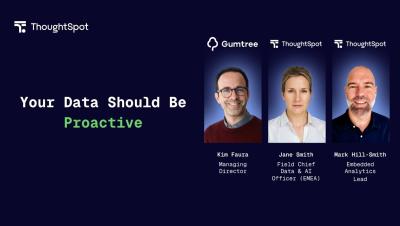
The bar for B2B software is being set by B2C experiences. In this clip, Kim Faura, former Managing Director at Gumtree, joins ThoughtSpot's Jane Smith and Mark Hill-Smith to talk about what this expectation shift means for product teams, and what it takes to close the gap between what B2B tools deliver today and what users now expect.