Logging Errors in PHP
Logging PHP errors is essential for monitoring and debugging. This article explores three of the best ways to log errors in PHP.


Logging PHP errors is essential for monitoring and debugging. This article explores three of the best ways to log errors in PHP.
There is no doubt that CodeIgniter is one of the best PHP frameworks for developing websites. However, before using CodeIgniter for development, every PHP developer should be aware of all the features of CodeIgniter to use it to its full potential. In this article, we will go over all the great features of the CodeIgniter framework in depth. It will help you understand how to use the CodeIgniter best for your development needs.
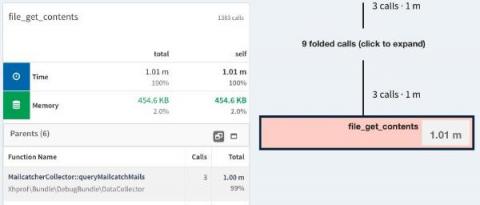
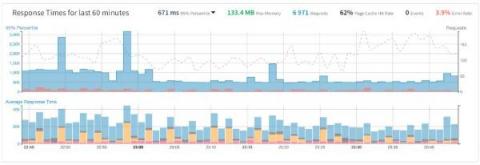
While working on the migration from Vagrant to Docker with Compose in our development setup, we were seeing extremely slow responses in the browser and I immediately made a mistake to assume I know the problem without measuring. A story in 7 acts.
Markdown makes it easy to add syntax to your plaintext documents and convert it to HTML later. PHP has robust support for parsing and rendering markdown—consider this your go-to guide for working with markdown in PHP.
In this post we post a comprehensive list of all the features that we have worked on over the last 3 months.
The modern world, which is full of mobile devices, requires more responsive web applications that provide real-time interactions. As a result, you require a practical backend framework to synchronize information in real time and develop a robust database link with the user interface. For example, let's consider your smartphone's live soccer game score that provides instant entry into all the player statistics.
You may have used OAuth before, but do you know how it really works? In this article, Mauro Chojrin dives deep into building an end-to-end OAuth implementation in PHP.
How do you debug your PHP code? If you use `echo`, `var_dump`, and `print_r`, there's a better way: use a debugger! Join Mauro Chojrin for an exploration of three world-class debuggers available for PHP.
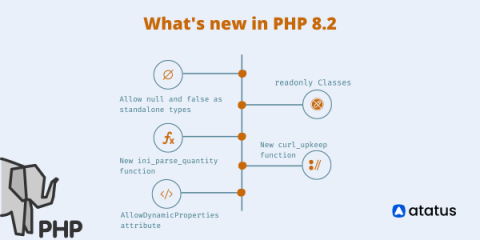
The PHP 8.2 release is just around the corner, and with it comes a number of fixes, improvements and deprecations. It is scheduled to be released late in November 2022. A third beta version of PHP 8.2.0 has now been released for testing. Before going into PHP 8.2 let’s take a quick look at the features of PHP 8.0 and 8.1. Some of the enhanced features in PHP 8.0 & PHP 8.1 are: In this blog post, we'll take a look at some of the most anticipated features coming in PHP 8.2.
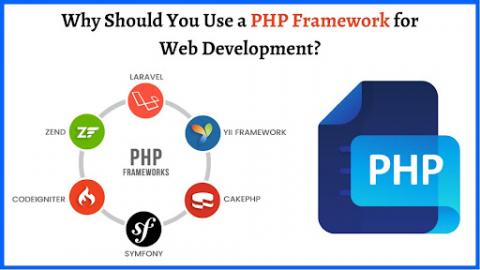
PHP is a powerful, server-side programming language with numerous benefits and features. The language is extensively utilized to create various web development solutions. However, core PHP may not be suitable to work on complex business requirements, as PHP code may get intricate. Also, efficiently maintaining complex applications built on PHP normally requires those who worked on the original project.