Systems | Development | Analytics | API | Testing

From Fear to Adoption: Stefano Puntoni on Fixing AI in the Workplace | The Data Chief

Is AI a tool or a threat? Wharton Professor Stefano Puntoni explains why "self-preservation mode" is killing AI adoption in the workplace. Puntoni joins Cindi Howson (The Data Chief host) & breaks down why AI isn't a strategy—it's a tool that requires a "meet in the middle" approach. To succeed, leaders must provide the vision and resources, while empowering workers to co-create the roadmap.

A Wharton AI Research Leader's Formula for Responsible AI

Learn why scaling AI is as much a human challenge as it is a technological one. Stefano Puntoni, Co-Director of Wharton Human-AI Research and Professor at The Wharton School, examines the limits of data-driven decision making in the age of AI and why insights so often fail to translate into action. He breaks down the psychology behind AI resistance and outlines the leadership and change management strategies needed to turn AI potential into real organizational impact.

Introducing Native Spreadsheets in ThoughtSpot

Every analyst has been there: Deadline looming, data in hand, and a BI tool that either requires a workflow you haven't learned or a colleague you can't reach. So you open Excel. It's familiar, it's flexible, and it works right now. So that's where the work happens—and now where insight stays, ungoverned and invisible to your team, your analytics stack, and your agents.

From Chaos to Clarity: How Spotter Unifies Healthcare Data for Better Decisions

Most healthcare teams are making decisions from multiple different dashboards and systems that don't talk to each other, which means someone is manually stitching together the picture—one that's always slightly out of date by the time it's ready. Outdated or incomplete data can lead to fragmented patient care and experiences. And no health system wants that. Whether tracking enrollment targets or auditing claims denials, Spotter applies standardized clinical logic to your unified dataset so you can focus on what matters: the patient. Go from chaos to clarity.

Spotter for Financial Services | Full Demo - March Spotlight

In the high-stakes world of financial services, an incomplete answer is more than a typo—it’s a liability that leads to compliance breaches, eroded client trust, and missed fraud. While general BI tools often force analysts into the weeds of manual data reconciliation, Spotter for Financial Services was engineered specifically to handle the industry's unique complexities.

Spotter for Supply Chain | Full Demo - March Spotlight

Supply chain leaders are constantly balancing supply and demand in a world where volatility is the only constant. But tracking disruptions after they happen isn't enough—true agility requires seeing them coming. In this session, Ivan Seow, our Senior Director of Product Marketing, takes the wheel for a deep-dive demo of Spotter for Supply Chain. He demonstrates how to move beyond reactive analytics and into a world of proactive, industry-tailored foresight.

AI Doesn't Know Your Industry. Spotter Does.

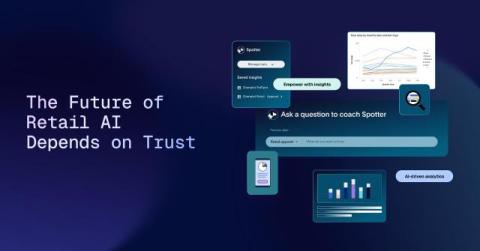
We launched Spotter with one goal: give every enterprise team their own analyst—an agent that reasons through business complexity, validates its own outputs, and surfaces answers you can actually act on. The response from customers made one thing clear: the ThoughtSpot foundation works. Teams trust Spotter, because it doesn’t only rely on an LLM to reconstruct your business logic on the fly—a process that produces different answers depending on how a question is phrased.

Talk to Your Data: How Verisk Finds Risk in Real Time with ThoughtSpot | The Data Chief

Stop searching. Start talking. On podcast, @Verisk_Analytics CDO Louis DiModugno explains how ThoughtSpot lets you “talk with your data” to find hidden risks in real time. No data scientist required. Music: “The Clermont” by Flash Fluharty Licensed via PremiumBeat, ID: P9IHFMDYNZCKLEFZ.

What Is an Agentic Semantic Layer, and Why Does It Matter?

AI can now generate SQL, build dashboards, and answer questions in plain language. But generating queries isn’t the same as understanding a business. The model might not know which revenue definition finance approves, how your fiscal calendar works, or which fields require restricted access. As AI agents become the front door to analytics, the real challenge isn’t query generation; it’s semantic grounding. That’s where the Agentic Semantic Layer becomes essential.