Systems | Development | Analytics | API | Testing

No Code API Tutorial | Build a Secure REST API in 5 Minutes with DreamFactory

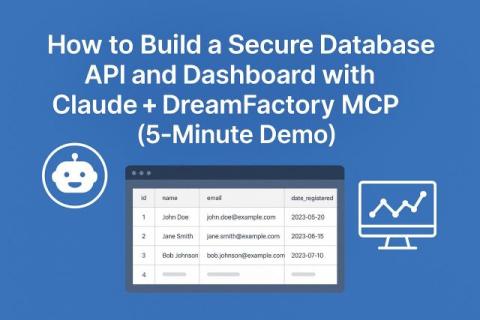
In this No Code API Tutorial, you’ll learn how to build a secure REST API in less than 5 minutes using DreamFactory — no coding required. This tutorial shows how to instantly generate a database API for your data products or front-end applications, saving you days or even weeks of development time. Here’s what you’ll discover in this step-by-step guide: How to connect to any SQL or NoSQL database instantly.

No Code API Tutorial: Merge Tables and Create Virtual Joins Across different Databases

This brief demo outlines how DreamFactory automatically inspects the schema of any database API created, enabling a wide range of data mesh activities, such as merging tables and joining data across disparate databases using virtual joins. This significantly reduces development time and ensures data consistency across your entire data landscape.

AI-Generated SQL: Enterprise Dream or Security Nightmare?

The idea of using an AI like GPT-5 or any LLM based tool to generate SQL from natural language sounds like a productivity goldmine. Ask the AI a question, and it automatically writes and executes the perfect query. Insight on demand. No SQL expertise needed. But beneath this automation lies a serious threat. Giving AI systems free rein to generate and run SQL against your production database is not just risky—it could be catastrophic.

Webhook Triggers for Event-Driven APIs

Webhooks are a smarter way for APIs to communicate in real-time. Unlike polling, which constantly checks for updates, webhooks automatically send notifications when specific events occur. This makes them faster, more efficient, and resource-friendly. Here’s how they work and why they matter: What are Webhooks?: They are HTTP callbacks triggered by events, delivering data instantly to other systems.

Governing Agentic AI: Secure, Scalable Data Access with DreamFactory

Few trends are capturing as much attention as agentic AI—autonomous systems that collaborate with humans, large language models (LLMs), and enterprise data to complete complex tasks. These agents are redefining work: handling customer service, streamlining compliance, conducting research, and orchestrating workflows across distributed environments. But as organizations scale their use of autonomous agents, one question looms large: How do we govern this power responsibly?

Cache Miss Handling in Microservices

When a cache miss occurs in a microservices architecture, the system fails to retrieve requested data from the cache, leading to slower performance as the data must be fetched from the database or other sources. Handling these misses efficiently is key to maintaining system speed and reliability. Here's a quick summary of the main strategies: Cache-Aside Pattern: The application fetches data from the database on a miss, stores it in the cache, and serves it to the user.

Expose Your Database to AI, Securely: A Guide to Zero-Credential, Injection-Proof Access

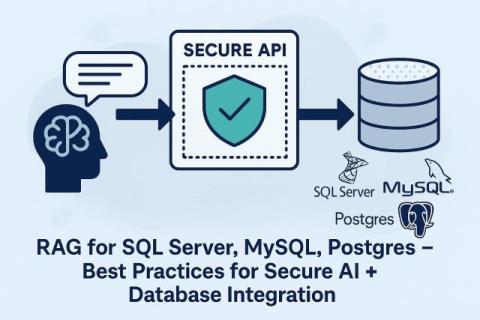
Large Language Models (LLMs) like ChatGPT and Claude offer powerful ways to extract insights from enterprise data. But connecting them directly to your backend databases—without security safeguards—can lead to disaster. A naïve setup, such as giving an LLM raw SQL login credentials, exposes your business to massive risk: credential leaks, SQL injection attacks, and unauthorized data access.

Post-Migration Testing for Cloud Migrations

Post-migration testing is not optional - it’s essential to ensure your systems work properly after moving to the cloud. Skipping this step can lead to data corruption, performance issues, and security vulnerabilities, which can disrupt operations and lead to costly fixes. Here's what you need to focus on.

Ensuring Data Consistency in Sharded APIs with High Latency

When dealing with sharded APIs, scaling is easier, but maintaining data consistency becomes a challenge, especially in high-latency environments. Here's the core problem: as data gets spread across multiple shards (or databases), operations like updates, reads, and transactions can lag or fail, leading to stale data, conflicts, or inconsistent states. This is especially problematic for critical applications like financial systems or e-commerce platforms.