Updates from Bugfender Q4, 2019
Welcome to the winter Bugfender newsletter. We hope you’re feeling refreshed after the holidays. We’ve had a fair few updates in the last quarter that we’d love to share with you to kick start the New Year!
Whenever I meet an engineer and chat with him about Bugfender, one of the questions I get asked most often is: what does it take to build a log aggregation tool like Bugfender? What’s behind it? When processing millions of log lines per day for several thousand users, coming from millions of devices, good architecture is key to enabling uninterrupted high-speed processing and growing the platform as new users sign up.
In this post we’re going to talk about how to integrate Intercom into your mobile apps. The company offers both iOS and Android SDKs and you’ve probably used them before in your different products (we certainly use them in Bugfender).
When you start a new project, everything is very easy and agile. You can develop, commit code and publish new versions quickly, without much testing. You probably don’t have a QA team, your test data is similar to your production data and you don’t develop multiple features at the same time. But as the project grows, it starts to become more and more complex.
When Apple introduced SwiftUI back in July we immediately knew it was going to generate a lot of expectations. As app developers ourselves, we are very aware about the complexity of User Interface development in iOS. UI has been keeping apps especially expensive and error prone along the years. Many frameworks were created to improve this situation like ComponentKit, Texture or even React Native.
It’s nearly five years since we started Bugfender as an offshoot of our software company Mobile Jazz. We’d gotten tired of chasing users who were experiencing problems with our apps and wanted to build an internal remote logging tool that would feed the information straight to us. It really was a garage project back then. We were running code sprints on our own time, so we wouldn’t have to dig into our savings. But we soon realized this could be much more than an internal experiment.
This month we have released one of our biggest UX updates since Bugfender 2, the new viewer. We are quite excited because we have been working on it over several months, we hope you like it!
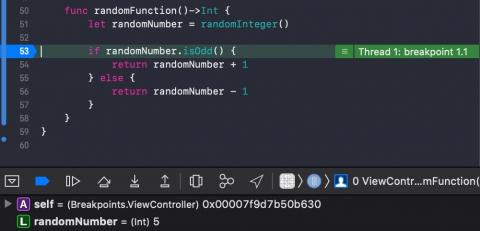
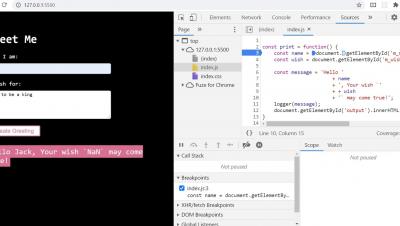
Conditional Breakpoints and their variants, Exception and Symbolic Breakpoints are powerful tools for advanced debugging, applicable to both iOS and Android. We’ll explore them in this article. In the first post of our How to Debug from Zero series we learnt the basics of breakpoints. At this point, you should know how to add a new breakpoint and how to use the “step over”, “step in” and “step out” commands.
Welcome to the Bugfender summer newsletter. Over the past few months you may noticed a few improvements to Bugfender’s web app, if not, we’ve summarised them here and you should go and check them out. The machine learning algorithm, which solves problems without requiring detailed instructions, is one of the most exciting technologies on the planet.
Reactive programming is a programming technique for asynchronous applications that lets you structure your code based on “reaction” to data input changes instead of an imperative programming style where you have to poll or block and wait for changes to happen. If you’re not 100% familiar with ReactiveX (RxJava being the implementation for the JVM), perhaps you know Java Stream, which is a similar concept introduced in Java 8.