Systems | Development | Analytics | API | Testing

How to Harness AI Data Governance for Data Integrity

It’s no secret that artificial intelligence (AI) is revolutionizing the way companies operate with its ability to sift through mountains of data and make accurate predictions at record speed. But with great power comes great responsibility. As AI systems are more regularly incorporated into business, it’s critical that data sources are both accurate and secure to prevent error.

Exception Handling in JavaScript

In JavaScript, errors are only detected during runtime. Therefore, it is impossible to get compile-time errors when building JavaScript applications. There are several reasons an app might encounter a JavaScript exception: invalid input, server error, syntax errors, or errors in the application logic. In this article, we will dig into exception handling in JavaScript so that when your app encounters errors, it affects users as little as possible.

5 Challenges Querying Data in Databricks + How to Overcome Them

Databricks is lighting the way for organizations to thrive in an increasingly AI-driven world. The Databricks Platform is built on lakehouse architecture, empowering organizations to break down existing data silos, store enterprise data in a single centralized repository with unified data governance powered by Unity Catalog, and make the data available to a variety of user groups to support diverse analytics use cases.

Which AI Should I Use? A Guide for Enterprise Decision Makers

Artificial Intelligence (AI) is transforming industries, enhancing decision-making processes, and creating new opportunities across various domains. However, selecting the right type of AI for your specific needs can be challenging. Broadly, AI can be categorized into predictive (sometimes known as discriminative or traditional) AI and generative AI, each serving different purposes.

Snowflake Acquires Night Shift Development, Inc. to Accelerate Growth in US Public Sector

Data is increasingly becoming critical for the public sector — from guiding decisions in higher education to enhancing citizen services and streamlining government operations. Government agencies are overwhelmed with data, whether it be structured, like incident logs, or unstructured, like satellite images. Harnessing the vast amount of data can become a burden for any organization, yet the insights have the potential to significantly improve quality of life and strengthen national security.

What is xP&A: A Look at the Evolution of Financial Planning

Financial planning and analysis (FP&A) is recognized as an essential tool for driving business success. At a time when agility has taken center stage, though, FP&A is giving way to the new discipline of extended planning and analysis (xP&A). Why? Because in an increasingly digital landscape where agility is paramount, actionable real-time feedback is essential.

What Is Automation Testing, and How Does It Fit into a QA Workflow?

If you work in Quality Assurance testing, you know that automated browser testing saves every tester from hours upon hours of manual test work. But exactly what is automation testing, and how does it fit into a typical QA workflow? We’ve got the full explanation for you in this straightforward guide on the basics of automation testing, how it can transform your QA process, and how to get started with test automation tools like Ghost Inspector.

Generative AI vs. Large Language Models (LLMs): What's the Difference?

What are the differences between generative AI vs. large language models? How are these two buzzworthy technologies related? In this article, we’ll explore their connection. To help explain the concept, I asked ChatGPT to give me some analogies comparing generative AI to large language models (LLMs), and as the stand-in for generative AI, ChatGPT tried to take all the personality for itself.

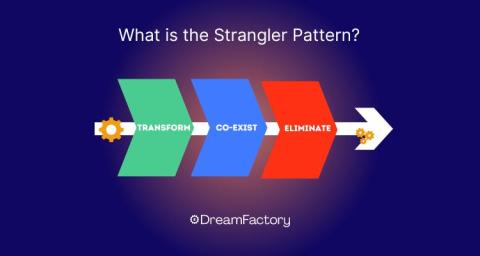
What is the Strangler Pattern? A Complete Overview

Modernizing legacy systems is often a daunting task, often filled with risks and uncertainties. The Strangler Pattern offers a proven, incremental approach to replace these outdated systems by gradually building new features around them, eventually phasing out the old system. The Strangler Pattern is a software modernization strategy that incrementally replaces parts of a legacy system with new functionality, allowing both systems to coexist until the legacy system is fully phased out.