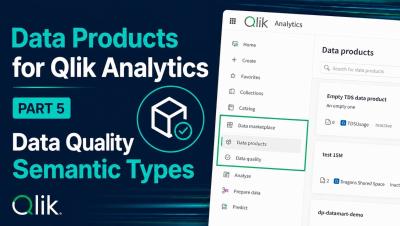
Data Products for Qlik Analytics - Data Quality -Semantic Types - Part 5

In this video, we dive into how Click Data Products combine Data Quality, Semantic Types, and business context to create trusted, scalable, and reusable data assets. We explore how semantic types in Qlik help classify and validate data using meaningful business definitions — improving consistency, discoverability, and confidence in analytics and AI-driven insights.
Resource Governance and GPU Quota Enforcement Across AI Teams

Resource governance is primarily an operational discipline, but it has direct security implications that are usually overlooked. This post covers what those implications are, what Kubernetes provides natively, where it falls short for AI workloads, and how ClearML addresses both dimensions. This is the third post in our four-part series on Kubernetes Security for Enterprise AI Environments.

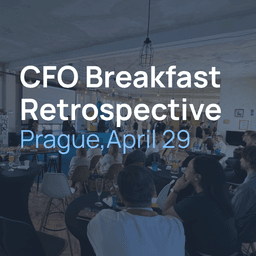
What We Learned Hosting a Finance Breakfast in Prague

Earlier this year we started asking a simple question to finance leaders we met at events, on calls, and in roundtables: where do you actually start with AI in finance? The answers were consistent enough that we decided to do something about it. We invited 30 CFOs, finance directors, and finance managers to a business breakfast at our Prague office. A morning with peers who are all trying to answer the same question: where do I actually start?

AI post-training: Finetuning using PEFT and DPO on Cloudera AMP

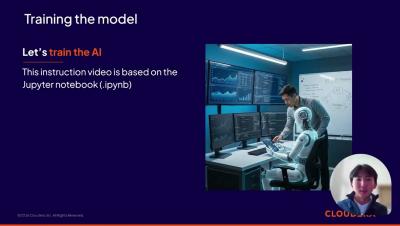
Post-training is rapidly becoming a critical phase of enterprise AI development. To get reliable output from an AI model, organizations must align its terminology (e.g., abbreviation) to fit their specific use cases. But getting started shouldn't require heavy computing resources—you can quickly train an open-source model right on your local device. In this tutorial, we sit down with the ASAP_DPO_Finetuning Cloudera AMP to demonstrate exactly how to align a language model to specific industry standards—in this case, Oil & Gas abbreviations.

How to Connect Power BI to Amazon DataZone (Without a JDBC Bridge)

Amazon DataZone is a powerful data management service that lets teams catalog, discover, and govern data across AWS environments. But when it comes to connecting your BI tools, options are limited. Data teams trying to connect Power BI to Amazon Datazone often hit the same wall when every guide, forum thread, and AWS doc points you toward a JDBC bridge or driver. However, Power BI doesn’t speak JDBC natively, which quietly costs data teams time, stability, and patience.

Integrating AI Into Apache Kafka Architectures: Patterns and Best Practices

Adding large language models (LLMs) and artificial intelligence (AI) to real-time event streams comes down to one thing: picking the right boundary between data transport and model compute. Where you run inference determines your system's resilience, latency, and cost. This article is for data engineers, streaming architects, and developers who want to add AI capabilities to their Apache Kafka event backbone without destabilizing production consumer groups or blowing through API rate limits.

Why Real-Time Stream Processing Beats Batch ETL for AI Data Freshness in 2026

AI has evolved fast. We've gone from static, predictive models to dynamic, interactive agents. But most organizations still run data pipelines that haven't kept up. Consider what’s happening in modern AI architecture. Teams deploy high-performance engines like large language models (LLMs) and real-time fraud detectors, then feed them data that's hours or days old.

Turning Virtualization Modernization Into Business Outcomes

As enterprises navigate rising virtualization costs and increasing infrastructure complexity, many are rethinking their approach to modernization. One organization leading this transformation is Alior Bank, a forward-looking financial institution that successfully modernized its IT environment to improve agility, resilience, and cost efficiency.