Systems | Development | Analytics | API | Testing

Why AI Agents Need Their Own Identity: Lessons from OWASP's MCP Security Guide

The recently released OWASP, “A Practical Guide for Securely Using Third-Party MCP Servers,” highlights a fundamental challenge in modern AI deployments: how do we govern, secure, and audit systems that are inherently non-deterministic? Unlike traditional, static software, AI agents dynamically adapt their execution paths, tool selection, and decisions based on context and real-time resources, allowing the same agent to achieve identical goals through entirely different approaches.

What is a MCP Gateway? The Missing Piece for Enterprise AI Infrastructure

AI agents are spreading across organizations rapidly. Each agent needs secure access to different Model Context Protocol (MCP) servers. Authentication becomes complex. Scaling creates bottlenecks. The dreaded "too many endpoints" problem emerges. You face a classic AI infrastructure headache. The numbers tell the story. Organizations using AI in at least one business function jumped from 55% to 78% in just one year. Generative AI usage specifically rose from 33% in 2023 to 71% in 2024.

Age of Agents and Access Management | WSO2 Technology Conference 2026

“Agentic” is the defining word of 2026. While Large Language Models (LLMs) serve as the brain , AI Agents are the limbs —entities that take action, interact with real systems, and make autonomous decisions. In this deep-dive session from the WSO2 2026 Technology Conference, Ayesha Dissanayaka from the WSO2 Identity & Access Management (IAM) team demystifies what truly makes an AI agent—and tackles the most critical enterprise challenge.

How To Use Copilot In Software Testing: A Practical Guide For Testers

Software testing is critical in assessing the quality of apps, testers oftentimes have to deal with limited resources when it comes to creating tests, as well as repetitively creating tests for all feature coverage. These factors lead to a significant reduction in both the speed of development and efficiency in the testing process.

Introducing DreamFactory's Apple Push Notification Service

DreamFactory 2.5 now supports Apple Push Notification Service (APNs). This blog post will show you how easy it is configure DreamFactory as your iOS app’s push notification provider. Note that APNs support is a premium feature in DreamFactory's Silver and Gold products, not an open source feature. APNs is a native DreamFactory service that supports role-service-access, live API documentation, script access, etc.

Learning About The Bitnami System Database | Dreamfactory

If you want to spin up a fast API solution, DreamFactory is a great way to do that with a Bitnami install. Within minutes you can have a fully documented and secure REST API to utilize. Just like any program bundle, there are lots of features to learn and interact with. Outside of a Docker Swarm or AWS ELB setup, it is pretty hard to find a way to spin up a DreamFactory instance faster. We are going to dive in a bit further to find out how to interact with the system database.

KAi Just Got a Major Upgrade, Powered by the New Kong Konnect MCP Server

KAi, the AI assistant inside Kong Konnect, just got significantly more capable. Today, we're announcing an enhanced beta version powered by the new Kong Konnect MCP Server — a shared infrastructure layer that also opens up your API platform to IDE copilots and custom agents. The result? KAi can now do things it couldn't before, and those same capabilities are available wherever you work. If you've used KAi before, you'll notice the difference immediately.

ROI of Digital Twin Testing: Cut Testing Costs by 50%

When engineering leaders review their cloud bills, they often focus on production costs—the infrastructure serving real users, processing real transactions, generating real revenue. But there’s a shadow cost lurking in every cloud environment that often goes unnoticed until it becomes painful: non-production infrastructure.
Sponsored Post

Peeking Under the Hood with Claude Code

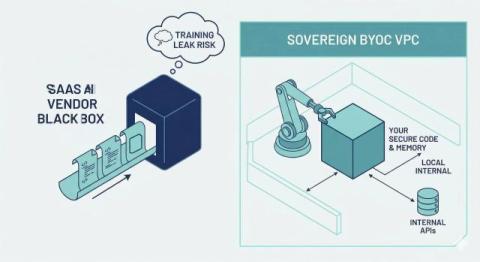
Claude is one of the go-to AI-native code editors for developers. Because it's a simple chatbot interface housed inside a familiar CLI, it provides a pretty smooth path between traditional IDEs and agentic AI. But what's actually happening behind the scenes when you ask it to write code, generate a test, or debug an issue? Who and what is it talking to behind the scenes? Can I prevent data leakage or do I need to add another layer to my tin foil hat? To answer these questions, I used proxymock to inspect the network traffic flowing from the Claude IDE.