Systems | Development | Analytics | API | Testing

How Yellowfin AI Analytics Helps Teams Turn Live Data Into Faster, Better Business Decisions

Slow data creates slow action. That is the real problem. A report delivered on a weekly cadence can miss a sales dip, a churn spike, or a supply issue that started yesterday. By the time the team sees it, the cost is already there. Corporate leadership and “The C-Suite” cares about revenue protection, customer experience, efficiency, and speed to decision. Those goals depend on live data, not stale snapshots.

Ep 72 | The Data Governance Coach: From Data Error to Insight

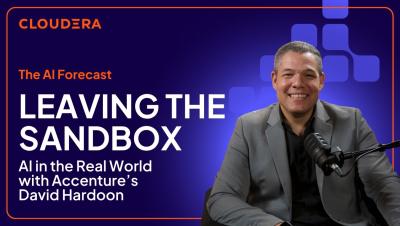
In the world of enterprise AI, the pressure on data has changed. What used to be “good enough” now gets amplified by faster decisions, and therefore, faster mistakes. Governance is fundamental in ensuring data trust and integrity. In this episode of The AI Forecast, Paul Muller sits down with The Data Governance Coach, Nicola Askham, to share her pragmatic perspective and assert that governance only delivers value when it’s simple enough for people to use and embedded into day-to-day work.

Scaling AI with Trust: Real-Time Access to Governed Data

Most AI strategies aren't failing because of models—they’re failing because data is fragmented, siloed, and hard to access. In fact, nearly 8 and 10 organizations say incomplete data access is holding them back. Moving the data drives up cost, introduces latency, and increases compliancy and security risks. Cloudera has introduced the Workflow Data Fabric Zero Copy Connector for ServiceNow to solve this. It allows you to securely leverage nearly 30 exabytes of data under management to power agented workflows without moving the data from wherever it lives.

Data Products for Qlik Analytics - Data Quality -Semantic Types - Part 5

In this video, we dive into how Click Data Products combine Data Quality, Semantic Types, and business context to create trusted, scalable, and reusable data assets. We explore how semantic types in Qlik help classify and validate data using meaningful business definitions — improving consistency, discoverability, and confidence in analytics and AI-driven insights.

AI post-training: Finetuning using PEFT and DPO on Cloudera AMP

Post-training is rapidly becoming a critical phase of enterprise AI development. To get reliable output from an AI model, organizations must align its terminology (e.g., abbreviation) to fit their specific use cases. But getting started shouldn't require heavy computing resources—you can quickly train an open-source model right on your local device. In this tutorial, we sit down with the ASAP_DPO_Finetuning Cloudera AMP to demonstrate exactly how to align a language model to specific industry standards—in this case, Oil & Gas abbreviations.

How to Connect Power BI to Amazon DataZone (Without a JDBC Bridge)

Amazon DataZone is a powerful data management service that lets teams catalog, discover, and govern data across AWS environments. But when it comes to connecting your BI tools, options are limited. Data teams trying to connect Power BI to Amazon Datazone often hit the same wall when every guide, forum thread, and AWS doc points you toward a JDBC bridge or driver. However, Power BI doesn’t speak JDBC natively, which quietly costs data teams time, stability, and patience.

Turning Virtualization Modernization Into Business Outcomes

As enterprises navigate rising virtualization costs and increasing infrastructure complexity, many are rethinking their approach to modernization. One organization leading this transformation is Alior Bank, a forward-looking financial institution that successfully modernized its IT environment to improve agility, resilience, and cost efficiency.

How to scale Gen AI to billions of rows in BigQuery at a fraction of the cost

For many, running generative AI over massive datasets has felt out of reach due to costs and slow processing times. Others settle for traditional ML techniques that require specialized skill sets and often deliver lower-quality results. With optimized mode for BigQuery AI functions, you can now get LLM-quality results at a fraction of the cost and at BigQuery speeds. In this video, we’ll show you how BigQuery uses model distillation and embeddings to process massive datasets, reducing query latency and token consumption.