

At ThoughtSpot, we know how important it is for businesses of every size and industry to empower every knowledge worker with personalized, actionable data-driven insights. These insights are your secret sauce to making better business decisions, growing faster, and delivering customer experiences that keep people coming back for more. But how do you scale self-service analytics to business users without completely overwhelming your data teams?
Over time, using the wrong tool for the job can wreak havoc on environmental health. Here are some tips and tricks of the trade to prevent well-intended yet inappropriate data engineering and data science activities from cluttering or crashing the cluster.
With any new, transformative technology comes a fear of the unknown, as I explored in my first blog of a new series on generative AI. Companies are pulled between acting quickly to avoid being left behind and proceeding with caution to avoid major missteps.
Over the past few years, software vendors moved their applications to the cloud. Microsoft committed heavily to the cloud across all its product lines, including the Dynamics family of ERP and CRM solutions. That will mean an eventual migration to the cloud for customers of Microsoft Dynamics AX, Microsoft Dynamics CRM, and the legacy Microsoft GP, SL, and NAV products.
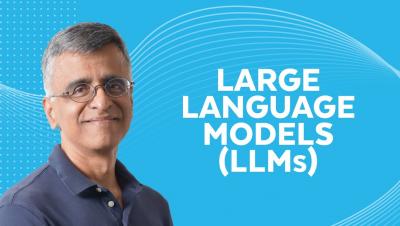
Sridhar Ramaswamy (Neeva co-founder) on the LLM landscape and his excitement for Summit! https://www.snowflake.com/summit/
❄Join our YouTube community❄ https://bit.ly/3lzfeeB
In spite of diligent digital transformation efforts, most financial services institutions still support a loose patchwork of siloed systems and repositories. These dis-integrated resources are “data platforms” in name only: in addition to their high maintenance costs, their lack of interoperability with other critical systems makes it difficult to respond to business change.