Systems | Development | Analytics | API | Testing

From Strategy to Action: See Konnect Metering & Billing in Motion

See how easily Konnect Metering & Billing transforms API and AI traffic management into new revenue streams. We've talked about why 2026 is the year of AI unit economics. There, we explored the "2025 hangover" where organizations realized that without financial governance, AI isn't just a science project but has become a margin-bleeding cost center. But "governance" and "monetization" shouldn't just be buzzwords in a resolution; they need to be part of your active infrastructure.

Kong Mesh 2.13: Mesh Identity Support for Universal Mode & LTS

Today, we're excited to announce Kong Mesh 2.13. Kong Mesh 2.13 delivers full support for Mesh Identity for Kubernetes and Universal mode. Plus, it's been designated as a Long Term Support release, with support for a total of 2 years. But first, what's Kong Mesh for the uninitiated?

Resolved: GPG Signature Warnings on Debian 13 and Modern Ubuntu

If you’ve recently upgraded to Debian 13 (“Trixie”) or a newer version of Ubuntu and suddenly started seeing security warnings when running apt update (or apt update --audit), don’t worry. You didn’t do anything wrong. This is a side effect of a broader security change across modern Linux distributions. SHA-1 signatures are being deprecated, and repositories that still rely on them may now trigger warnings or audits.

Why AI Agents Need Their Own Identity: Lessons from OWASP's MCP Security Guide

The recently released OWASP, “A Practical Guide for Securely Using Third-Party MCP Servers,” highlights a fundamental challenge in modern AI deployments: how do we govern, secure, and audit systems that are inherently non-deterministic? Unlike traditional, static software, AI agents dynamically adapt their execution paths, tool selection, and decisions based on context and real-time resources, allowing the same agent to achieve identical goals through entirely different approaches.

KAi Just Got a Major Upgrade, Powered by the New Kong Konnect MCP Server

KAi, the AI assistant inside Kong Konnect, just got significantly more capable. Today, we're announcing an enhanced beta version powered by the new Kong Konnect MCP Server — a shared infrastructure layer that also opens up your API platform to IDE copilots and custom agents. The result? KAi can now do things it couldn't before, and those same capabilities are available wherever you work. If you've used KAi before, you'll notice the difference immediately.

What is a MCP Gateway? The Missing Piece for Enterprise AI Infrastructure

AI agents are spreading across organizations rapidly. Each agent needs secure access to different Model Context Protocol (MCP) servers. Authentication becomes complex. Scaling creates bottlenecks. The dreaded "too many endpoints" problem emerges. You face a classic AI infrastructure headache. The numbers tell the story. Organizations using AI in at least one business function jumped from 55% to 78% in just one year. Generative AI usage specifically rose from 33% in 2023 to 71% in 2024.

The End of the Wait-and-See Era for ERP Modernization

If you’re an SAP customer, you’ve probably heard the same pitch more than once: just wait a little longer. Your migration to S/4HANA will unlock the agility you need. Your SAP Business Technology Platform (BTP) investments will catch up soon. Your workflows will get faster. Your data will become more accessible. Just a little more time. But what if you can’t wait? What if your supply chain teams are buried under manual work?

Age of Agents and Access Management | WSO2 Technology Conference 2026

“Agentic” is the defining word of 2026. While Large Language Models (LLMs) serve as the brain , AI Agents are the limbs —entities that take action, interact with real systems, and make autonomous decisions. In this deep-dive session from the WSO2 2026 Technology Conference, Ayesha Dissanayaka from the WSO2 Identity & Access Management (IAM) team demystifies what truly makes an AI agent—and tackles the most critical enterprise challenge.

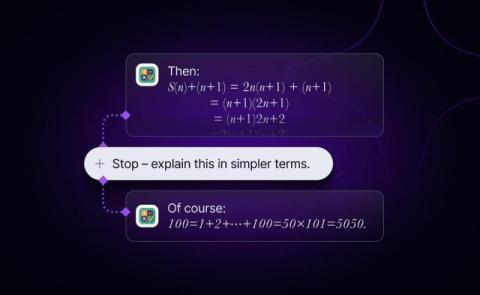
Realtime steering: interrupt, barge-in, redirect, and guide the AI

Start typing, change your mind, redirect the AI mid-response. It just works. That is the promise of realtime steering. Users expect to interrupt an answer, correct its direction, or inject new instructions on the fly without losing context or restarting the session. It feels simple, but delivering it requires low-latency control signals, reliable cancellation, and shared conversational state that survives disconnects and device switches.

CVE, CVSS, and the Mistake Most Teams Keep Making

Modern software systems are exposed to a constant stream of disclosed vulnerabilities. Thousands of new issues are published every year across operating systems, runtimes, libraries, and frameworks. Treating all of them as equally urgent is not realistic, and trying to do so often leads to ineffective security work. To manage this volume, the security community relies on two foundational mechanisms: CVE and CVSS.