
Systems | Development | Analytics | API | Testing

AI Portfolio Management: Governing AI Investments at Scale

Are you still evaluating when and how to implement AI across your asset and wealth management operations? While many organizations remain in the planning stage, others have already started integrating AI into their decision-making frameworks because AI adoption in the FinTech space has matured enough. According to the PwC Asset & Wealth Management Report, firms adopting AI-led transformation could see up to a 12% revenue increase by 2028.
Zero-ETL Database APIs: Live Data Without Data Movement | DreamFactory

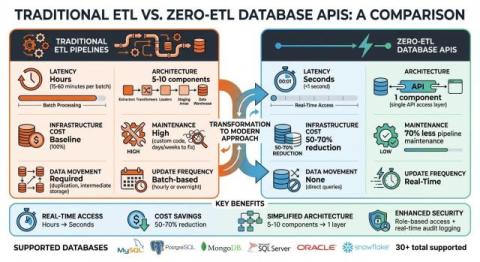
Zero-ETL Database APIs let you access live data instantly without needing traditional ETL processes. Instead of extracting, transforming, and loading data, these APIs query databases directly in real-time, significantly reducing delays that can span hours. Key features include federated querying (accessing multiple data sources simultaneously) and schema-on-read (applying schemas dynamically during queries).

Building a Django Chat App with WebSockets

Django is well known for being used to develop servers for HTTP connections and requests for applications. Unfortunately, when building Django chat app or any chat app that requires the connection to remain open for a two-way connection, using an HTTP connection is inefficient. WebSockets provide a means of opening a two-way connection between the client and the server so that all users connected to the open network can get related data in real time.

DreamFactory 7.4.4 Release: AI-Optimized Data Models, Custom MCP Tools, and Granular Access Controls

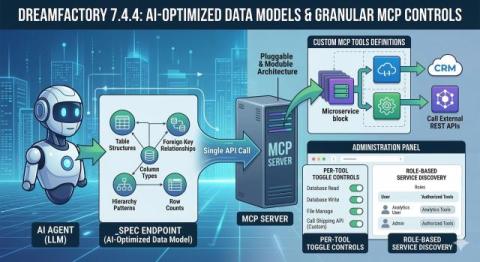
DreamFactory 7.4.4 is a significant release for teams connecting AI agents to enterprise databases through the Model Context Protocol (MCP). The new _spec endpoint gives LLMs a complete understanding of any database schema in a single API call. Custom MCP tool definitions let admins extend their MCP server beyond built-in database operations. And new per-tool toggle controls with role-based service discovery bring the governance enterprises need before deploying AI-database integrations to production.

The European Health Data Space (EHDS): From Regulation to Reality

The European healthcare landscape is undergoing its most significant digital transformation in decades. We are moving away from a fragmented era where health data was locked within the walls of individual hospitals and national borders. In its place, the European Health Data Space (EHDS) is emerging, a unified digital ecosystem designed to give patients control over their data and unleash its potential for research and innovation.

Kong Simplifies Multicloud Cloud Gateways with Managed Redis Cache

As enterprises race to deploy multicloud architectures and Agentic AI, they face a common bottleneck: "state." To govern AI token usage, manage agent-to-agent communication, or optimize performance via caching, API and AI gateways require a persistence layer to synchronize data. We’re excited to share the GA of Managed Redis cache for Kong Dedicated Cloud Gateways (DCGW).

Configuring Kong Dedicated Cloud Gateways with Managed Redis in a Multi-Cloud Environment

A persistent challenge arises as businesses adopt multicloud architectures and agentic AI: the need for state synchronization. API and AI gateways require a robust persistence layer to synchronize data, whether it's for governing AI token usage, facilitating agent-to-agent communication, or boosting performance through caching.

Leveraging the MCP Registry in Kong Konnect for Dynamic Tool Discovery

As enterprises start deploying AI agents into real systems, a new architectural challenge is emerging. Agents need a reliable way to discover tools, services, and capabilities dynamically, instead of relying on hardcoded integrations. This is where the Model Context Protocol (MCP) ecosystem is rapidly evolving. MCP servers expose tools and capabilities that AI agents can use. However, once organizations begin deploying multiple MCP servers across environments, the question becomes clear.