Systems | Development | Analytics | API | Testing

Break the Boundaries Between Product and UX with Embedded Intelligence

For years, product teams from software companies have faced the same uphill battle: deliver analytics that hopefully fulfill their customers’ expectations while keeping their own roadmaps on track. Too often, the result is static dashboards tacked onto an application—uninspiring, difficult to maintain, and disconnected from user workflows. Meanwhile, customer expectations have evolved. They want analytics that feels alive, intelligent, and seamlessly part of the products they use every day.

The Agentic Semantic Layer and OSI: A New Standard for AI

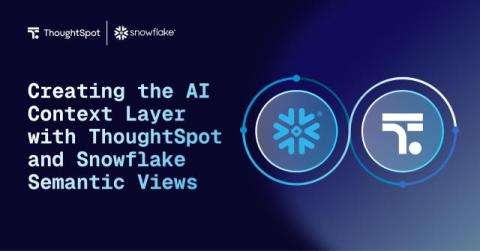
At ThoughtSpot, we've long understood that a robust semantic layer is the linchpin of a successful data strategy. Our Agentic Analytics Platform is built on a semantic foundation that makes it possible for anyone to get trusted, instant answers from data using simple natural language. However, the industry has struggled with a foundational challenge for years: a lack of a common semantic standard.

Breaking the Boundaries of Legacy Analytics

As leaders across industries, we’ve all experienced the frustration of legacy BI tools—spending weeks building dashboards that end up unused, or struggling with rigid filters that block true exploration and insight. Calling this “data-driven” is no longer acceptable! Today, the pace of AI innovation has raised expectations. Customers and end users now demand instant, contextual, and explainable intelligence, seamlessly embedded into their daily workflows.

3 product leaders share their embedded analytics strategies

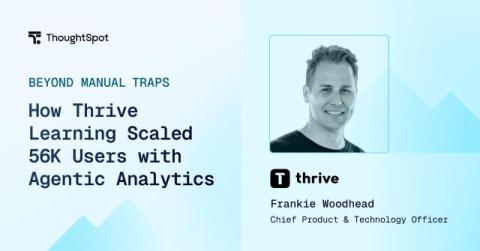
For today’s SaaS leaders, accelerating product roadmaps is a top priority. That’s why the most forward-thinking teams are embedding AI-native intelligence directly into the tools and workflows their users rely on every day. Recently, I had the privilege of speaking with product leaders from Tekion, Navan, and ASK BOSCO in ThoughtSpot’s executive masterclass on embedded analytics.

The New Standard for AI-Driven Decisions

The strategy is strong, but the insight you need—clear, live, decisive—is missing. It’s buried in dashboards. Stuck in backlogs. Trapped inside tools that promised acceleration, but only slowed you down. We were told things would be different. That self-service would finally work. That AI would bring clarity. That decisions could move at the speed of business. But the promise fell short. You invested in business intelligence. What you got was a backlog.

AI for UX design: 5 best practices for product designers

AI is no longer a fringe experiment: it’s a mainstream mandate. But with that shift comes a new kind of pressure: to act quickly, to appear modern, to bolt on something “intelligent” before someone else does. For many teams, this leads to reactive choices. Features get prioritized because they sound impressive, not because they solve a real user problem. Familiar interfaces get copied instead of questioned.

Drive user engagement through native analytics with ThoughtSpot

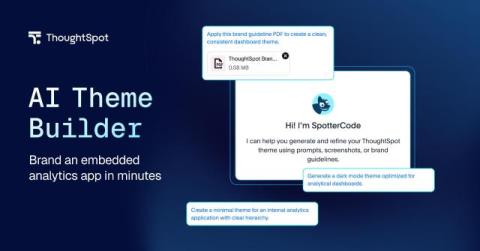
You’ve spent months building a modern and intuitive app. It's fast, user-friendly, and visually consistent. But your embedded analytics is still a clunky iframe that is totally disconnected from your UX. Users get frustrated, and engagement flatlines. In today's data-driven business landscape, embedded analytics has become a critical competitive differentiator.

How ThoughtSpot turns bold ideas into AI innovation

Innovation isn't a buzzword at ThoughtSpot; it's the lifeblood of our business. It’s woven into our culture, driving us to constantly push boundaries and deliver exceptional value to our customers, our partners, and our team. Recently, I had the privilege of sitting down with a powerhouse panel of senior functional leaders for an “Innovation Spotlight” session. Our goal? To share how bold thinking translates into real-world impact across the many different facets of our organization.

Introducing ThoughtSpot's Agentic MCP Server

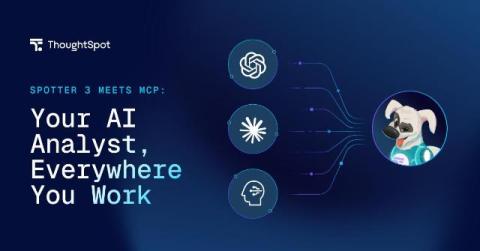
The AI agent revolution is transforming how we work, but most analytics platforms are stuck in the past—forcing you to context-switch between your agents and separate BI tools to get data insights. This fragmented approach creates friction, breaks workflows, and ultimately slows down decision-making. When speed matters most, you need your AI agents to seamlessly access and analyze enterprise data without the traditional barriers of maintaining custom integrations and limited API functionality.