Systems | Development | Analytics | API | Testing

Top Care Journey Orchestration Tools for Patient Engagement

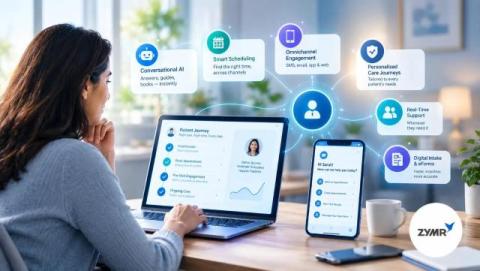
Care journey orchestration tools connect patient communication with scheduling, care instructions, and follow-up workflows. They use available patient information and configured rules to guide actions across care stages. Depending on the tool, patient responses can trigger scheduling, additional guidance, or care team alerts. The goal is engagement that produces action.

Best 10 Platforms for Care Journey Orchestration in Healthcare

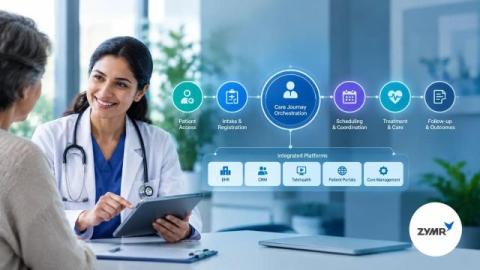
Platforms for care journey orchestration connect patient data, clinical rules, and automated workflows. They coordinate tasks across healthcare systems, assign responsibilities, and track each step through completion. These capabilities help teams translate clinical plans into timely actions across the patient journey. For healthcare organizations evaluating care journey orchestration platforms in 2026, business value depends on specific workflow improvements.

SSO for Healthcare: How Single Sign-On Works in Clinical Environments

Healthcare organizations are abandoning legacy identity systems. In 2026, a 250-bed hospital still running standalone credentials across EHR, pharmacy, and billing systems faces escalating regulatory risk, operational friction, and insider threat exposure. Enterprise SSO for healthcare solves this by unifying identity across HIPAA-regulated applications while enforcing zero-trust principles at every access point. But SSO for healthcare isn't just Okta or Azure AD out-of-the-box.

Data Interoperability vs Healthcare Interoperability: Definitions, Differences, and Why Both Matter - The 2026 Comparison Guide

Data interoperability enables systems to exchange and reuse information across platforms. Healthcare interoperability extends that capability with clinical context, patient identity, privacy, and compliance controls. This guide answers what is data interoperability, what is healthcare interoperability, and how the two relate. In 2026, the distinction supports regulatory readiness, reliable AI, and safer data exchange.

How Medical Practice Consulting Improves Both Compliance and Patient Experience

How closely are compliance and patient experience actually connected in a medical practice? While compliance often focuses on regulations, documentation, privacy, and operational standards, it can directly influence how smoothly patients move through their care. Disorganised processes, inconsistent communication, or poorly managed administrative responsibilities can create compliance risks while also frustrating patients.

Top Healthcare Interoperability Companies to Know in 2026

The healthcare interoperability vendors 2026 buyers are evaluating enable secure data exchange across providers, payers, patients, and digital health platforms. Their solutions connect fragmented systems through Fast Healthcare Interoperability Resources (FHIR) APIs, Health Level Seven (HL7) interfaces, identity matching, and terminology mapping. Vendor selection is critical because most Centers for Medicare & Medicaid Services (CMS) CMS-0057-F API requirements begin in January 2027.

Healthcare Interoperability Solutions: Types, Approaches, and How to Choose (2026)

Healthcare interoperability solutions enable secure data exchange between EHRs, payers, laboratories, devices, and patient applications. Zymr's healthcare engineering teams work across all of these categories, which is where the framework below comes from. These solutions use standards such as HL7 FHIR to structure data and support API-based integration.

How to Improve Interoperability in Healthcare: A Practical Roadmap (2026)

Healthcare interoperability enables clinical, administrative, and financial systems to exchange usable health information securely. It connects EHRs, payer platforms, laboratories, pharmacies, medical devices, and patient applications. In 2026, interoperability requires more than transferring data between disconnected systems. Healthcare organizations must standardize data models, resolve patient identities, govern access, maintain semantic consistency, and support real-time API-based workflows.

Top Challenges of Interoperability in Healthcare and How AI Is Helping Solve Them

Healthcare interoperability enables clinical and administrative systems to exchange usable patient information. However, connectivity alone does not ensure accurate interpretation or workflow compatibility. Many of the challenges with interoperability in healthcare have less to do with moving data and more to do with whether the receiving system understands what that data means. FHIR standardizes healthcare data exchange through structured resources and implementation frameworks.