Advanced marketing analytics can improve campaign relevance, increase customer lifetime value, accelerate insights, reduce acquisition costs, and drive ROI. But moving to advanced analytics requires a thoughtful investment in the right infrastructure for storing, tracking, and analyzing customer data, which can be daunting to companies that only have basic analytics capabilities.
Use our dbt package for HubSpot to build your sales and marketing dashboards.
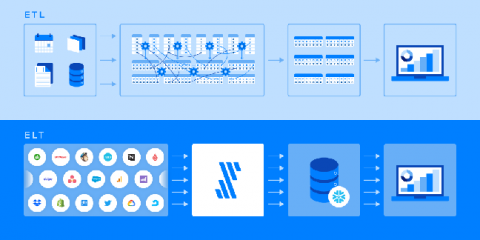
Learn why ELT is better than ETL and how you can get started with it.
SQL has long been the universal language for working with data. In fact it’s more relevant today than it was 40 years ago. Many data technologies were born without it and inevitably ended up adopting it later on. Apache Kafka is one of these data technologies. At Lenses.io, we were the first in the market to develop a SQL layer for Kafka (yes, before KSQL) and integrate it in a few different areas of our product for different workloads.
If you’re an engineer exploring a streaming platform like Kafka, chances are you’ve spent some time trying to work out what’s going on with the data in there. But if you’re introducing Kafka to a team of data scientists or developers unfamiliar with its idiosyncrasies, you might have spent days, weeks, months trying to tack on self-service capabilities. We’ve been there.
From data stagnating in warehouses to a growing number of real-time applications, in this article we explain why we need a new class of Data Catalogs: this time for real-time data. The 2010s brought us organizations “doing big data”. Teams were encouraged to dump it into a data lake and leave it for others to harvest. But data lakes soon became data swamps.