Systems | Development | Analytics | API | Testing

How to Create SQL Percentile Aggregates and Rollups With Postgresql and t-digest

When it comes to data, let’s start with the obvious. Averages suck. As developers, we all know that percentiles are much more useful. Metrics like P90, P95, P99 give us a much better indication of how our software is performing. The challenge, historically, is how to track the underlying data and calculate the percentiles. Today I will show you how amazingly easy it is to aggregate and create SQL based percentile rollups with Postgresql and t-digest histograms!


Cloudera Operational Database experience (dbPaaS) available as Technical Preview

The Cloudera Operational Database (COD) experience is a managed dbPaaS solution which abstracts the underlying cluster instance as a Database. It can auto-scale based on the workload utilization of the cluster and will be adding the ability to auto-tune (better performance within the existing infrastructure footprint) and auto-heal (resolve operational problems automatically) later this year.

Operational Database Scalability

Cloudera’s Operational Database provides unparalleled scale and flexibility for applications, enabling enterprises to bring together and process data of all types and from more sources, while providing developers with the flexibility they need. In this blog, we’ll look into capabilities that make Operational Database the right choice for hyperscale.

Video: Database Optimization

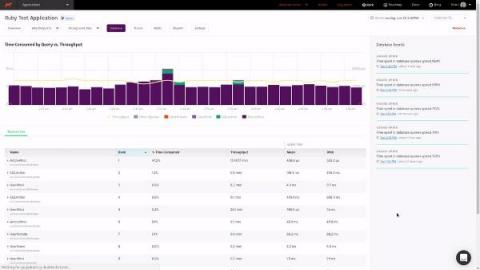
Most modern web applications are heavily reliant on persisting data with relational databases, and so it’s no surprise that a large part of application performance monitoring relates to keeping an eye on database performance to ensure that our SQL queries are as efficient as possible. With this in mind, Scout features a Database Addon module, and in this video we are going to take a closer look at what it has to offer.