Systems | Development | Analytics | API | Testing

Choosing the best JavaScript framework for your next project

The State of Developer Ecosystem 2022 report revealed that 65% of developers are using JavaScript, making it the most popular language. JavaScript also claims the spot of most popular primary language with 34%. Of all the JavaScript developers 80% use at least one JavaScript framework. Though there are thousands of JavaScript frameworks available, only a small subset of them is being used by developers.

How to add realtime updates to your React application

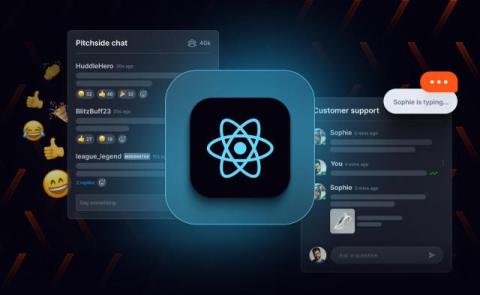
Imagine having to restart WhatsApp whenever you anticipate a new message, or needing to reload the page every time you expect an update on the big game. That would be a terrible user experience! Today, users expect the UI to automatically update the moment information becomes available from the backend, so, of course, we must enable them in our applications. There are a handful of technologies, techniques, and services you can use to implement live updates in React.

Essential guide to WebSocket authentication

Authenticating WebSocket connections from the browser is a lot trickier than it should be. Cookie authentication isn’t suitable for every app, and the WebSocket browser API makes it impossible to set an Authorization header with a token. It’s actually all a bit of a mess! That is the last thing you want to hear when it comes to security, so I’ve done the research to present this tidy list of methods to send credentials from the browser.

Ultimate guide: Best databases for NodeJS apps

NodeJS is a JavaScript-based backend framework for web applications. It enables fast, scalable, and efficient development with high concurrency and data streams. Choosing the right database for NodeJS applications is a challenge for developers. A database should store and manage the data, handle the volume and velocity of data, provide the features and functionality you need, and be compatible, easy, secure, and reliable with NodeJS.

How InvitePeople events platform uses Ably - Interview with CTO Erik Gullestad

Their platform is used by companies like Deutsche Bahn to host virtual and hybrid events, from webinars to conferences with tens of thousands of online concurrent participants.. In this interview, Erik Gullestad, co-founder and CTO of InvitePeople talks about his experience building an event management platform and about InvitePeople’s success with Ably.

How to build an avatar stack with Ably Spaces

Tom Camp, DevRel Engineer at Ably takes you through a tutorial of adding an avatar stack to your application using Ably's latest product, Spaces. An avatar stack is a visual representation of a user’s presence - showing them as online and connected. They are the most common way of showing the online status of members in an application by displaying an avatar for each member. Events are emitted whenever a member enters or leaves a space, or updates their profile data.

How to authenticate a Next.js Route Handler using Clerk

When building web applications you’ll often be using services on the client that require authentication. A common way client-side SDKs like Ably authenticate themselves is by using server-side API endpoints that generate and return access tokens. Using access tokens allows you to keep your service’s secrets on the server and instead issue time-limited and scope-limited tokens to a client. Some services even let you create revocable tokens for added security.

No more refreshing: Achieving low latency data with Ably and Confluent Cloud

Realtime data is rapidly becoming a standard in many consumer applications. From responsive chat applications to low latency financial applications, nobody wants to refresh their browser for new data. With lots of data bouncing around Kafka behind a firewall, it begs the question of how you can serve this information to your users without sacrificing on latency. Ably provides a seamless way to serve this data to your end users devices, globally, through a direct integration with Confluent Cloud.

How to use WebSockets with React and Node

In this WebSocket tutorial, Alex Booker from Ably (@CodeCast) teaches you how to implement realtime updates in your React applications. Here, we use React on the frontend and Node on the back to build a live cursors feature from scratch, but the fundamental WebSocket lessons can be applied to any manner of realtime application. WebSockets are a bidirectional full-duplex communication protocol used to enable realtime updates such as chat, multiplayer collaboration, notifications, and other live updates in your React applications.