In the previous posts in this series, we have discussed Kerberos, LDAP and PAM authentication for Kafka. In this post we will look into how to configure a Kafka cluster and client to use a TLS client authentication. The examples shown here will highlight the authentication-related properties in bold font to differentiate them from other required security properties, as in the example below. TLS is assumed to be enabled for the Apache Kafka cluster, as it should be for every secure cluster.
Manufacturing’s digital transformation growth is truly impressive considering it’s delivering value with explosive growth rates. Consider that Manufacturing’s Industry Internet of Things (IIOT) was valued at $161b with an impressive 25% growth rate, or that the Connected Car market will be valued at $225b by 2027 with a 17% growth rate. But then conflicting information arrives as VentureBeat reports that around 90 percent of machine learning models never make it into production?
Having introduced the flow delivery challenges and corresponding resolutions in the first article ‘Cloudera Flow Management Continuous Delivery while Minimizing Downtime’, we will combine all the preceding solutions into an example of flow management continuous delivery architecture. DataFlow Continuous Delivery Architecture In the whole process, we can see the following steps.
We believe security is the cornerstone of any legitimate data platform, and we’re excited to announce that Cloudera has successfully achieved SOC 2 Type II certification for Cloudera Data Platform (CDP) Public Cloud. Achieving our SOC 2 certification is the culmination of significant work across our organization and demonstrates to independent auditors that we adhere to industry-standard security controls and processes.
Has your organization considered upgrading from Hortonworks Data Flow (HDF) to Cloudera Flow Management (CFM), but thought the migration process would be too disruptive to your mission critical dataflows? In truth, many NiFi dataflows can be migrated from HDF to CFM quickly and easily with no data loss and without any service interruption. Here we explore three common use cases where a CFM cluster can assume an HDF cluster’s dataflows with minimal to no downtime.
Do you need faster time to value? Does your organization’s success depend on immediate delivery of new reports, applications, or projects? When you go to Central IT for support, are you blocked by insanely long wait times for the resources needed to meet your business goals? If so – you are likely one of the growing group of Line of Business (LoB) professionals forced into creating your own solution – creating your own Shadow IT.
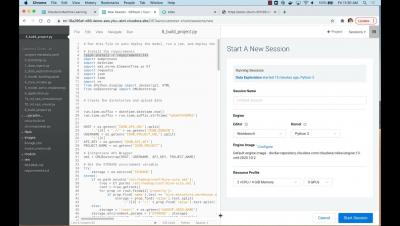
In this last installment, we’ll discuss a demo application that uses PySpark.ML to make a classification model based off of training data stored in both Cloudera’s Operational Database (powered by Apache HBase) and Apache HDFS. Afterwards, this model is then scored and served through a simple Web Application. For more context, this demo is based on concepts discussed in this blog post How to deploy ML models to production.
Digital transformation is a hot topic for all markets and industries as it’s delivering value with explosive growth rates. Consider that Manufacturing’s Industry Internet of Things (IIOT) was valued at $161b with an impressive 25% growth rate, the Connected Car market will be valued at $225b by 2027 with a 17% growth rate, or that in the first three months of 2020, retailers realized ten years of digital sales penetration in just three months.
In the previous posts in this series, we have discussed Kerberos and LDAP authentication for Kafka. In this post, we will look into how to configure a Kafka cluster to use a PAM backend instead of an LDAP one. The examples shown here will highlight the authentication-related properties in bold font to differentiate them from other required security properties, as in the example below. TLS is assumed to be enabled for the Apache Kafka cluster, as it should be for every secure cluster.