If you’re in a regulated industry, you or your team has likely had to use Failure Mode and Effects Analysis (FMEA) for compliance. But because of the way regulated industries have to balance between the world of very strict quality standards and also high-velocity Agile processes, traditional FMEA has to evolve in order to meet the challenges that are arising in this new reality.
Product failures and defects can occur on many different shapes and levels, impacting any part of the user experience, functionality, and even safety. In the past, organizations were taking the approach of of Failure Mode and Effects Analysis (FMEA) for risk assessment. This allowed teams to identify and prevent failure before a product or update is released.
Historically, SoC’s have been designed in a project-centric design style. But with the proliferation of IP-centric architectures and methodologies, thought needs to go into an optimal design partitioning. That’s what we break down in this blog.
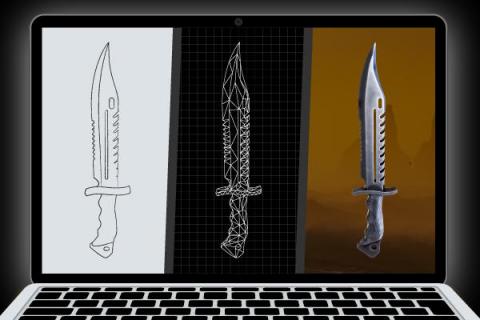
Chances are, you or someone on your team is trying to break into mixed reality development. Mixed reality is the latest technology that blends the real world with digital experiences. Most major tech companies are investing in their own vision of the metaverse — i.e. the more connected future of the internet. That means mixed reality is quickly moving from an emerging technology to our new reality.
To achieve success in product development, your teams must be aligned on clearly defined business criteria. If your teams are not marching to the same drumbeat, you significantly increase your risk exposure around quality issues and threaten your ability to hit deadlines. So how can companies ensure alignment? One popular option is incorporating business acceptance testing into existing workflows.