Systems | Development | Analytics | API | Testing

ETL Consulting: The Backbone of Data Integration

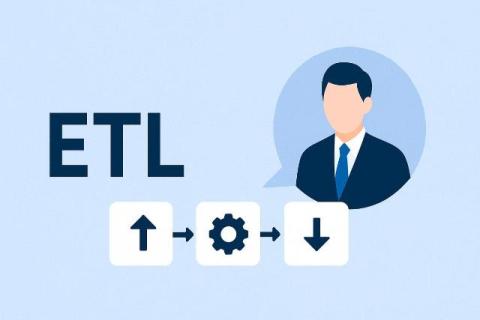
In an era where big data is often referred to as the “new oil,” extracting value from raw information is more critical than ever. However, this process is far from straightforward. Organizations today deal with data sprawled across SaaS platforms, on-prem systems, databases, CRMs, and countless APIs. Making sense of it requires powerful and reliable Extract, Transform, Load (ETL) capabilities — and that's where ETL consulting services become indispensable.

AI ETL Tools: Revolutionizing Data Engineering

In 2025, the integration of Artificial Intelligence (AI) into Extract, Transform, Load (ETL) processes is transforming the data engineering landscape. Traditional ETL workflows are evolving from rigid, manually scripted pipelines into intelligent, adaptable systems powered by AI. These AI-driven ETL tools enable companies to handle increasing data complexity, schema drift, and real-time transformation demands without massive engineering overhead.

ETL Frameworks in 2025 for Robust, Future-Proof Data Pipelines

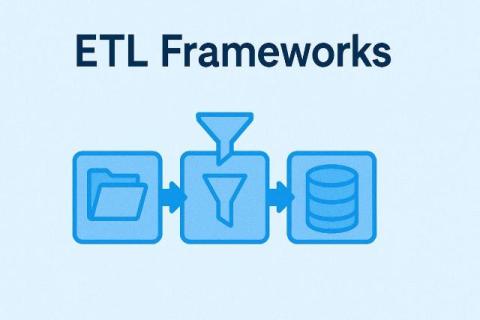
ETL (Extract, Transform, Load) frameworks have evolved significantly over the past two decades. In 2025, as data pipelines expand across cloud platforms, real-time systems, and regulatory constraints, the architecture and flexibility of ETL frameworks are more critical than ever. This post explores the key principles, features, and operational concerns that modern data professionals need to understand to build effective, scalable ETL frameworks for data engineering use cases.

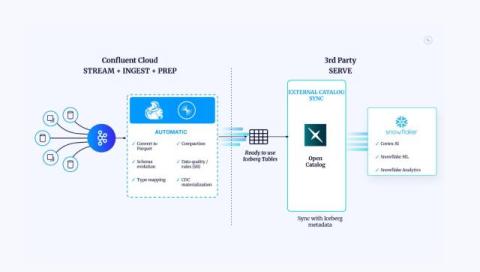
Building Streaming Data Pipelines, Part 1: Data Exploration With Tableflow

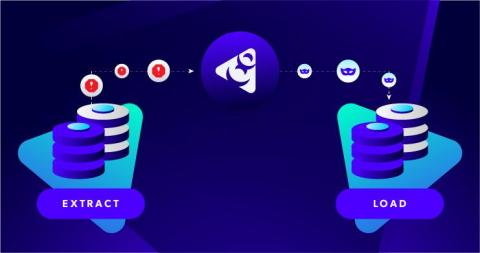
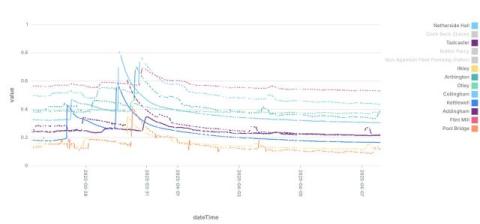
Whether we like it or not, when it comes to building data pipelines, the ETL (or ELT; choose your poison) process is never as simple as we hoped. Unlike the beautifully simple worlds of AdventureWorks, Pagila, Sakila, and others, real-world data is never quite what it claims to be. In the best-case scenario, we end up with the odd NULL where it shouldn’t be or a dodgy reading from a sensor that screws up the axes on a chart.

Kafka ETL for Real-Time Data Pipelines

In the era of real-time analytics, traditional batch ETL processes often fall short of delivering timely insights. Apache Kafka has emerged as a game-changer, enabling organizations to build robust, scalable, and real-time ETL pipelines. This article delves into how Kafka for ETL facilitates modern integration processes, its core components, best practices, and real-world applications.

Open Source ETL Frameworks: A Complete Guide

In today’s data-driven world, organizations face the challenge of data processing and integrating vast amounts of information from diverse sources. Open source ETL (Extract, Transform, Load) frameworks have emerged as powerful tools to streamline data workflows, offering cost-effective, scalable, and customizable solutions. This blog delves into the benefits, features, and top ETL solutions in the open source ETL landscape.

12 Best SQL Server ETL Best Practices

In a world where data-driven decisions shape the future of every business, ETL (Extract, Transform, Load) processes are the backbone of operational intelligence. For organizations using Microsoft SQL Server, optimizing ETL pipelines isn't just a technical choice—it’s a strategic imperative. With over two decades in the ETL trenches, I’ve seen what works, what fails, and what silently erodes performance behind the scenes.

Cost Aware Data Engineering: Designing Snowflake ETL Pipelines for Maximum Efficiency

Are your Snowflake ETL pipelines silently draining your budget? With 80% of data management experts struggling to accurately forecast cloud costs (Forrester), the efficiency of your ETL processes is more crucial than ever. Join us for this session in our Weekly Walkthrough drop-in series, "Controlling Cloud Costs," where we'll explore how to optimize your Snowflake ETL pipelines for cost and performance.

Data Normalization for Data Quality and ETL Optimization

Have you ever struggled with duplicate records, inconsistent formats, or redundant data in your ETL workflows? If so, the root cause may be a lack of data normalization. Poorly structured data leads to data quality issues, inefficient storage, and slow query performance. In ETL processes, normalizing data ensures accuracy, consistency, and streamlined processing, making it easier to integrate and analyze.