Systems | Development | Analytics | API | Testing

Data Leaders Survey: The present and future of data

To understand the current challenges and future priorities of data operations, we surveyed 85 data leaders across multiple global verticals - from retail to marketing, from software to fintech. The CEOs, CTOs, CCOs, VPs of Data, and Heads of Strategy all chipped in to unveil how they run data operations today and what they foresee in the future of data operations.

Kimball vs Inmon: Which approach should you choose when designing your data warehouse architecture?

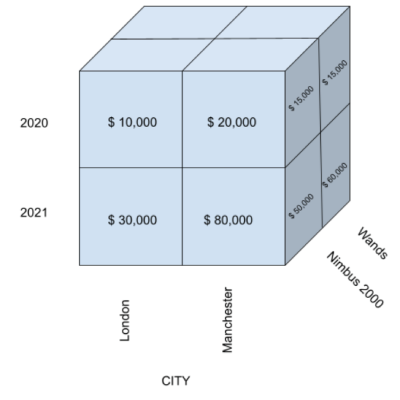
Data warehouses are the central data repository that allows Enterprises to consolidate data, automate data operations, and use the central repository to support all reporting, business intelligence (BI), analytics, and decision-making throughout the enterprise. But designing a data warehouse architecture can be quite challenging.

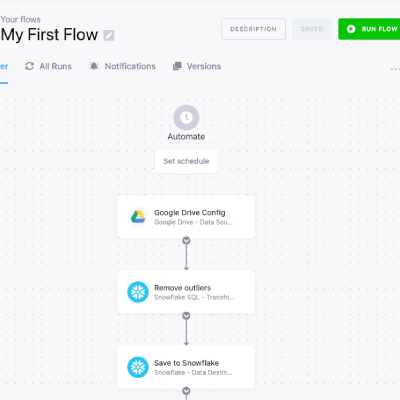
Do you want to build an ETL pipeline?

Analysts and data scientists use SQL queries to pull data from the data storage underbelly of an enterprise. They mold the data, reshape it, and analyze it, so it can offer revenue-generating business insights to the company. But analytics is only as good as the material it works with. That is, if the underlying data is missing, compromised, incomplete, or wrong, so will the data analysis and inferences derived from it.

Do you want to get the most out of your HubSpot data?

HubSpot is one of the leading CRMs for fast-growing companies. It allows you to run your marketing and sales pipelines smoothly from a single web application. But there is a problem. HubSpot offers limited tools to track and analyze your data. To answer your most pressing analytical queries you need to work with the raw data that is hidden in your CRM.

Do you want to create and automate a digital marketing report?

When your marketing team manages a myriad of social media platforms (from Facebook to TikTok), it is hard to keep an eye on the ROI of your marketing efforts. Each platform comes with its own set of dashboards that provide marketing analytics. But the trends and insights from those dashboards are limited to each specific platform. Knowing how you performed on Google Ads tells you very little whether you should increase your Facebook advertising expenditures.

Relational vs non-relational database: Which one should you use?

Ever since E. F. Codd introduced the first relational model for storing data at IBM in 1970, the industry has picked up the database technology and used it for its competitive advantage. The relational database management system - or RDBMS - was the default technology for storing and accessing data for a long time. It supported transactional data storage, the building of data products, and was the go-to model for data that was used in data-driven decisioning.

ETL vs ELT: 11 Critical differences

ETL and ELT refer to two patterns of data storage architecture within your data pipelines. The letters in both acronyms stand for: So both ETL (extract, transform, load) and ELT (extract, load, transform) processes help you collect data, transform it into a usable form and save it to permanent storage, where it can be accessed by data scientists and analysts to extract insights from the data. What is the difference?

Data Warehouse vs Database: What is the difference and which one should you choose?

The world of big data is getting bigger every day. As the volume of data increases exponentially, businesses of all sizes try to capture raw data, process it, and extract insights for competitive decision-making. The end-to-end operation of extracting value from data is called the ETL process. It stands for: A crucial component of the ETL process is the data storage aspect. The two main contentious architectures for storage solutions are databases and data warehouses. But how do they differ?

Automated Competition Scraping with Apify and Keboola

Whether you saw or missed our webinar, we thought it would be useful to provide a step-by-step guide on how to set up quick competition monitoring (or, any other web scraping and data processing automation) with Apify and Keboola. Thank you Apify and Revolt.bi for the collaboration! So what can you do with automated competition data processing? In this article, we’ll take an example of daily monitoring of the best-sellers list at Amazon.