At Ably we've been able to make a transformational change in how we build SDKs as a result of what's now possible with LLMs. In this post, I explain how.
You're mid-conversation with an AI support agent. You've explained the problem, the agent is halfway through a response, and the connection drops. When you reconnect, the response is gone. You type the same question again. The agent asks the same clarifying questions again. Three minutes of context, gone. Not because the model forgot it, but because the delivery layer stored nothing.
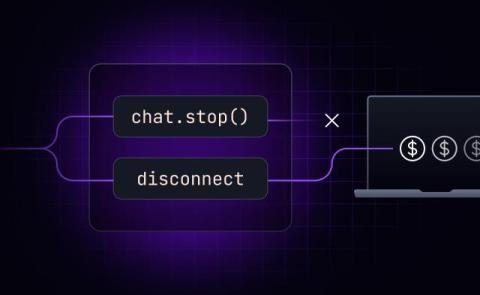
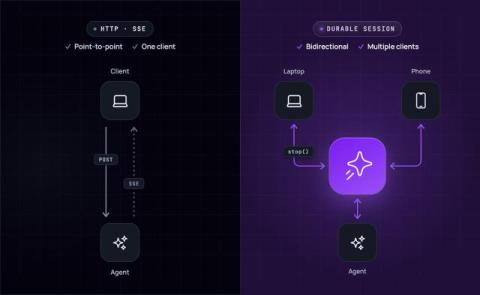
WebSockets are the right protocol for production AI chat. But that fact doesn’t prevent the failure most teams hit first. An enterprise load balancer closes the idle connection at 60 seconds during a tool execution wait. Your reconnect logic fires in under a second, the agent keeps running server-side, and the client receives nothing from the gap. No tokens, no tool call results, no context. The reconnected socket has no view of what happened while it was down.
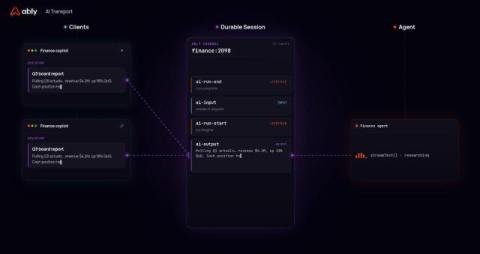
Ably is a realtime messaging platform, it's a pub/sub product where you can publish messages to channels and clients subscribed to those channels will receive those messages in realtime. It turns out that the Ably realtime platform is really well suited to being the transport that sits between your AI models and the clients receiving the generated responses.
Picture a developer pair-programming with an AI assistant. The model returns a function that almost works. The developer asks it to try again. The second attempt is worse. They want the first one back. In a linear chat, that history is gone, or it's a third bubble in the thread that pollutes context for every future turn.
Take any AI agent demo from the last six months. It works. Now ship it to real users on real networks, real devices, real attention spans. A meaningful share of those users will never finish their first conversation cleanly. Not because the model gave a bad answer. Because the connection dropped, the tab refreshed, the phone took over from the laptop, or the spinner kept spinning forever.
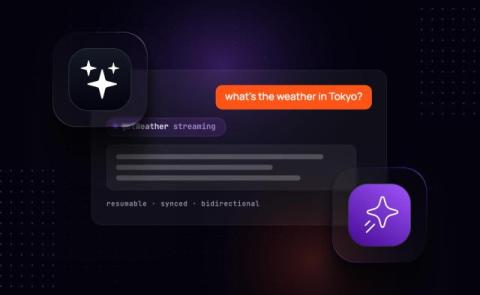
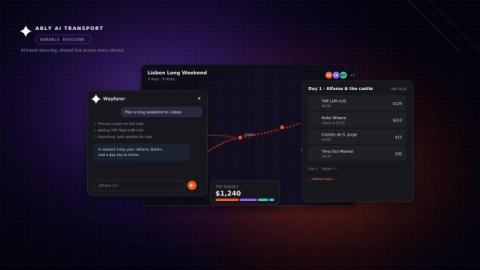
At Ably we recently shipped AI Transport, our drop-in transport layer for streaming LLM output over Ably channels, with all the resumability, multi-device continuity, and handover guarantees that implies.
If you've built a conversational AI feature, you know the pattern. Client sends a message, backend calls a model, response streams back over HTTP. SSE mostly, or WebSockets if you need bidirectional. For a single user on a single device, it works well. The trouble is the best AI products right now have moved well past that.
I spoke at AI Engineer Europe last week, and came away with a clearer picture of where the industry actually is right now. My talk was about why AI user experience breaks at the transport layer. But the bigger takeaway wasn't from my own session. It was from watching what the rest of the room was building, and what problems they were running into.
By Matt O'Riordan, CEO and Co-Founder Across AI infrastructure right now, one word is doing a lot of work: durable. It is attached to execution. To agents. To workflows. To sessions. To streams. To transports. To memory. Every few weeks, another product ships with "durable" in the name. This is not branding noise. The underlying observation is the same in every case. AI systems are long-lived. They can fail at any layer. They need infrastructure that assumes failure rather than hopes against it.