Systems | Development | Analytics | API | Testing

Public Interest Technology: Closing the Innovation Risk Gap, Part 2

Look around and you’ll see the benefits of hyperautomation everywhere as it scales business processes faster than a speeding algorithm, takes the friction out of customer engagement, and drives business transformation to the moon and back. In the long run, this trend will likely create a new generation of jobs. But in the short term, it may also raise anxiety among workers fearing job loss amid the post-COVID hyperautomation boom. To put this anxiety into perspective.

9 Crucial Low-Code Automation Capabilities to Evaluate

Low-code automation platforms enable businesses to rapidly automate their applications and workflows. Basic low-code tools can create applications that help users perform simple tasks. But rapid app delivery is only the beginning of what low-code can do. The most advanced low-code automation platforms deliver powerful business process automation capabilities.

"Automation Maturity": What It Is and How to Measure It

Since pneumatic tubes streamlined the transfer of documents across banks and mainframe computers revolutionized back-office processes, automation has been a driver of innovation and progress in financial services for over a century. In today’s digital world, automation’s latest iteration has the power to transform operations across departments and use cases: customer onboarding, underwriting, compliance, and more.

Complete Automation: Combining Knowing and Doing

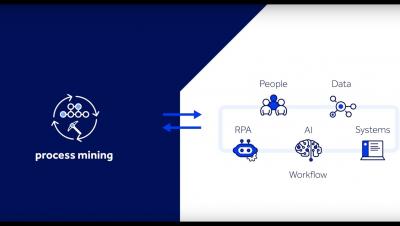
Our announcement that Appian has acquired process mining innovator Lana Labs is a turning-point in automation, and more importantly, for our customers. The addition of native process mining makes Appian the world’s most complete Low-Code Automation Suite. We are coming together to create a unique offering with tremendous value.

3 Challenges to Overcome When Implementing Low-Code Development

Frequent software delivery drives innovation. According to the State of DevOps Report, high-performing organizations deploy 200x more frequently and have 3x lower change failure rates than lower-performing organizations.This type of velocity and scale is only possible for a highly capable engineering team with an advanced DevOps infrastructure. However, legacy and startup organizations may have a harder time accomplishing this.

Dzone Low Code Show. Using Low code for Devops.

Dawie Botes, Customer Success Head at Linx, talks low code with the team at Dzone. Dawie provides an insight into how we use low-code in our DevOps processes, including the building and maintenance of several tasks - from the creation of cloud servers, to data management, notifications and the Linx solutions that handle our software licensing generation and validation.