
How to Use Proxies for SEO
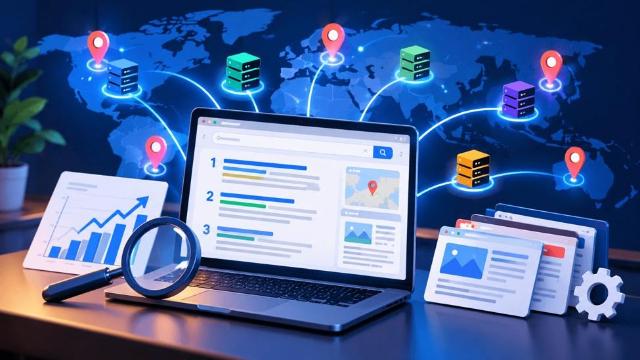
Proxies route your requests through a different IP address, which sounds simple until you realize how much SEO work depends on seeing the internet from somewhere other than your own machine. Google shows different results depending on location, and a single IP hammering search results all day looks a lot like a bot to most sites.
That's basically why proxies became standard tooling for SEO work rather than some niche technical trick. Rank tracking, competitor research, and large-scale data collection all lean on them in one way or another.
Why SEO Pros Actually Use Proxies
Research and data collection at scale is the biggest driver. Checking rankings across dozens of locations or scraping thousands of SERP results from a single IP gets you blocked fast, and proxies spread that load across many addresses instead. Comparing verified providers through a resource like ProxyCoupons early on is worth doing too, since pricing and coverage vary more between services than most people expect going in.
Automation is the other major reason. Tools running scheduled rank checks, competitor audits, or bulk keyword lookups need proxies to keep running without tripping rate limits or CAPTCHA walls.
Where Proxies Fit Into Everyday SEO Work
Rank tracking across different locations is nearly impossible without them, since Google personalizes results by location and a single IP only ever sees one version of the SERP.
- Competitor research
Pulling a competitor's ranking data, backlink profile, or content changes repeatedly from one IP eventually gets that IP flagged, so distributing requests avoids tripping detection systems.
- SERP analysis
Validating how search results actually look for real users in different regions requires seeing the SERP the way those users see it, not the version your own location happens to get.
- Keyword research
Bulk keyword volume and difficulty lookups through tools that scrape data directly benefit from IP rotation to avoid rate limiting mid-project.
- Large-scale web scraping
Crawling thousands of pages for content audits or technical SEO analysis needs enough IP diversity that no single address gets rate-limited or banned partway through.
Picking the Right Proxy Type for the Job
Residential proxies use real household IPs and blend in as regular traffic, making them the safest choice for tasks where getting blocked would be costly, like checking localized rankings on sensitive sites.
Datacenter proxies are fast and cheap but easier to detect, which makes them fine for lower-risk, high-volume tasks like basic scraping where getting an occasional IP blocked isn't a big deal.
Mobile proxies run through actual carrier networks and carry the highest trust score of any type, useful for tasks that mimic real mobile user behavior specifically.
Rotating proxies cycle through a pool automatically, spreading requests so no single IP absorbs all the traffic, which fits scraping and bulk-checking tasks that would otherwise burn through a static IP fast.
Real Use Cases Worth Knowing
Checking localized search results is the most common one, since an SEO campaign targeting five different countries needs to actually see five different versions of the SERP, not one filtered through your home location.
Monitoring competitors consistently, rather than in occasional manual checks, catches ranking shifts and content changes early enough to actually react to them.
Validating SERP data matters more than people assume, since scraped ranking data pulled through an unreliable proxy can quietly return inaccurate positions that throw off an entire report. Managing multiple SEO tools or accounts without cross-contamination is another practical case, especially for agencies running several client accounts through the same tools simultaneously.
What Actually Affects Proxy Performance
Speed, location coverage, rotation frequency, reliability, and cost all interact in ways that make "cheapest option" a bad shortcut for picking a provider.
A slow proxy pool drags out scraping jobs regardless of how many IPs are in it. Location coverage needs to actually match your target markets, not just claim broad "worldwide" coverage that turns out thin outside a couple of countries. Checking a provider through ProxyCoupons before committing to a plan saves the step of testing five different services manually just to find one with decent coverage in the regions that actually matter.
Reliability and cost round this out, and a cheap plan that fails constantly ends up costing more in wasted time than a slightly pricier, stable one ever would. None of these factors work in isolation either, a fast proxy pool with terrible location coverage is just as useless for localized rank tracking as a well-located one that keeps timing out.
Risks Worth Watching For
Poor-quality proxies produce inaccurate data more often than people expect, which is a real problem when SEO decisions get made off numbers that were never right to begin with.
Blocked IPs waste time and sometimes flag legitimate accounts along with them, especially when a shared proxy pool gets abused by other users before you ever touch it. Terms of service violations deserve real attention too, since scraping at scale can cross into territory that search engines and target sites explicitly prohibit. Detection methods and policies keep shifting too, which is part of why keeping half an eye on broader SEO and analytics coverage tends to pay off over time rather than only reacting once something breaks.
Using Proxies Responsibly
Match the proxy type to the actual risk level of the task instead of defaulting to the cheapest or most powerful option available.
Respect rate limits even when proxies make it technically possible to ignore them, since aggressive scraping can get entire IP ranges blacklisted for everyone using that provider. Keep proxy use as one part of a broader SEO strategy, not a replacement for good keyword research, quality content, and legitimate link building.
Final Thoughts
Proxies solve a genuine problem for SEO work, letting professionals see search results the way real users in different locations actually see them without one IP address absorbing all the traffic. Pick the proxy type that matches your actual task, verify a provider's reliability before committing, and stay mindful of the terms you're operating under. Used properly, proxies become a quiet but essential part of doing SEO research at any real scale.