Systems | Development | Analytics | API | Testing

ODSC Webinar: Git Based CI/CD for ML

In this session, Yaron Haviv, Iguazio's Co-Founder and CTO, discussed how to enable continuous delivery of machine learning to production using Git-based ML pipelines (Github Actions) with hosted training and model serving environments. He touched upon how to leverage Git to solve rigorous MLOps needs: automating workflows, reviewing models, storing versioned models as artifacts, and running CI/CD for ML. He also covered how to enable controlled collaboration across ML teams using Git review processes and how to implement an MLOps solution based on available open-source tools and hosted ML platforms. The session includes a live demo.

On Connectivity and Conflict

The Two Generals’ Problem is a well-known thought experiment about how asynchronous – and potentially unreliable – communications can cause, shall we say, issues. These great generals from history are facing a cunning and capable enemy. Think of someone like Khalid ibn al-Walid, Napoleon, Erwin Rommel or Sun Tzu. If the generals attack together, they will win. If they attack separately, they will lose. The problem is that they are communicating over an unreliable and slow medium.

Moesif and Datadog: Feature Similarities, Differences, and How They Can Work Together

Moesif and Datadog are both platforms that provide monitoring and the ability to view metrics. At their core, though, both platforms do very different things for your organization and the teams that use them. Both can complement each other very well and contain features that can aid in making better products that scale seamlessly.

How Bayer Crop Science uses BigQuery and geobeam to improve soil health

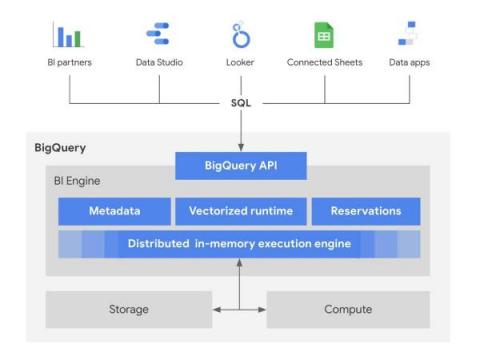
Bayer Crop Science uses Google Cloud to analyze billions of acres of land to better understand the characteristics of the soil that produces our food crops. Bayer’s teams of data scientists are leveraging services from across Google Cloud to load, store, analyze, and visualize geospatial data to develop unique business insights. And because much of this important work is done using publicly-available data, you can too!

What Is the Difference Between REST and SOAP APIs?

When machines need to communicate with one another and exchange data, they require certain formatting for specific data types. That's where SOAP API and REST API come into play. They allow for communication and transfer of data, but each is different in several ways. From implementation to their required resources, various attributes separate one from the other.

Legacy Modernization and the Value of Enterprise Systems

Talk of what to do with legacy systems often causes angst among leaders. Retiring the system means lost functionality that might be too difficult to replace. Keeping it means more time spent on maintenance rather than value-added tasks. Replacing it can be a financial and logistical nightmare. The result of these talks is often to simply keep it and make do as best as possible.

The Complete Guide to Using the Iguazio Feature Store with Azure ML - Part 1

In this series of blog posts, we will showcase an end-to-end hybrid cloud ML workflow using the Iguazio MLOps Platform & Feature Store combined with Azure ML. This blog will be more of an overview of the solution and the types of problems it solves, while the next parts will be a technical deep dive into each step of the process.

Automating Customer Touchpoints with Snowflake, Hightouch, and dbt Cloud

With hundreds of SaaS products in a given company, it’s getting more and more challenging and time-consuming to manage supplier relationships and negotiate contracts. Vendr has completely transformed this entire process by creating a SaaS buying platform where stakeholders can easily handle the relationships and contracts of their different software suppliers in a centralized platform.

A Practical Guide to Reducing the Burden of Flaky Tests

Flaky tests are automated software tests that sometimes pass and sometimes fail without an obvious reason. Often these tests will work well for a while, then occasionally start to fail. If the test passes on a second or third try without any obvious reason for the failures, the tester typically chalks it up to a glitch in the system and ignores the failed test result.