Systems | Development | Analytics | API | Testing

How to Build a Digital Mortgage Platform: Architecture, Compliance & AI Strategy

Getting a mortgage today still feels slower than it should. Borrowers deal with repeated document uploads, limited visibility, and long approval cycles. Meanwhile, lenders struggle with legacy systems, manual underwriting, and rising compliance pressure. The cost is real. Inefficient mortgage processes increase time-to-close, cost per loan, and drop-offs mid-application.

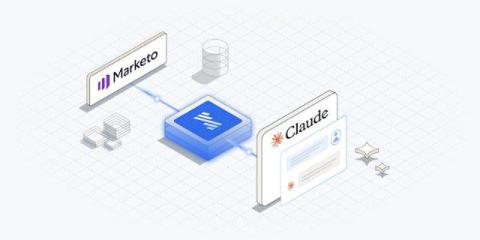
Run Local LLMs on Mac to Cut Claude Costs

Part of the motivation for this post is how cloud API economics are shifting: Anthropic is moving large enterprise customers toward per-token, usage-based billing (unbundled from flat seat fees), which makes “always call the API” a moving cost line for teams at scale. A hybrid or local layer is one way to keep spend bounded while you still use premium models where they matter.

MCP in Production: Governing Agentic API Consumption | DeveloperWeek

As AI agents begin interacting with APIs, traditional API governance models need to evolve. In this DeveloperWeek session, Derric Gilling (WSO2) explains how organizations can manage and secure agent-driven API consumption using the Model Context Protocol (MCP). Unlike human applications, AI agents can generate large volumes of API calls from a single prompt. Without proper controls, this can lead to unexpected costs, security risks, and limited visibility into how APIs are being used.

Velocity can't come at the cost of quality

AI-generated code is flooding your pipelines. Your test automation debt is piling up. If this sounds familiar, you're not alone. Velocity can't come at the cost of quality. As AI transforms how we build software, API testing must evolve. Join Justin Collier, Senior Director, Product Management, and Yousaf Nabi, Developer Advocate, to explore the future of API testing in an AI-driven world.

Why the "tsunami of code" is breaking QA | From the Bear Cave Ep. 3

Recent SmartBear research shows that 70% of teams are already seeing quality degrade with AI-generated code, creating a real bottleneck in the software-development lifecycle (SDLC). As output increases, QA teams are left choosing between delaying releases to validate changes or shipping faster with less confidence in what’s actually working. In this From the Bear Cave clip, SmartBear CEO Dan Faulkner and CMO Kelly Wenzel dig into a growing gap in modern software development: how AI is accelerating code generation but testing and quality validation aren’t scaling with it.

10 Ways to Optimize API Performance Testing for Faster, More Reliable Results (2026 Guide)

Many teams dedicate time and resources to API performance testing, yet still face sluggish releases and delayed deployments. Incidents slip through, and users encounter slow applications. The root cause? Too often, teams treat performance testing as a checkbox, without truly simulating real-world loads or analyzing key performance metrics such as latency, throughput, and error rates. This leads to a false sense of readiness that quickly unravels in production environments.

Data & AI Anywhere: Mastering Digital Sovereignty with Cloudera

Hey, did you know?... Cloudera's "anywhere" approach means *you* get to choose and control where you deploy your data and AI. Continue watching to hear how we make that possible. In this video, learn how Cloudera helps organizations maintain comprehensive control over their most valuable assets through three critical pillars: Chapters.

Android Studio Breakpoints: How to Debug Android Apps Faster

Breakpoints are one of the most useful tools we can call on when we’re debugging applications. If you’re not familiar, they allow us to pause execution and examine what the program is doing at that moment. And Android Studio offers a whole bunch of add-ons to supplement its core functionality. In this guide, we’ll show you how Android Studio breakpoints work and how you can maximize their potential in your day-to-day work.