

Systems | Development | Analytics | API | Testing

Creating value from legacy data - The whys and the hows of legacy system integration

While there are many challenges young companies might struggle with, they certainly escaped one that is a blessing and a curse at the same time – the legacy IT systems. Data is indeed one of the companies’ most valued assets, as knowledge (read, ‘data’) empowers better, more informed business decisions. Moreover, chances are your organization already has most of the knowledge it needs. The only caveat, though, is that it might be inaccessible and therefore, pretty useless.

Databases Demystified Lesson Distributed Databases Part 3

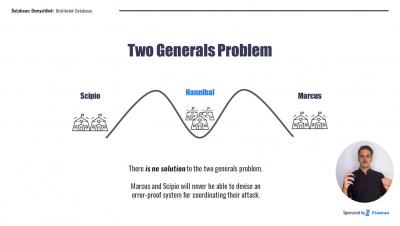
In this episode of Michael Kaminksy's Databases Demystified, he explores: What does “consensus” mean and why is it important? Learn about the two-generals problem and what it teaches us about reaching consensus Learn about the main consensus algorithms in distributed databases: Raft & Paxos

Databases Demystified Lesson 1 Introduction to Databases and SQL

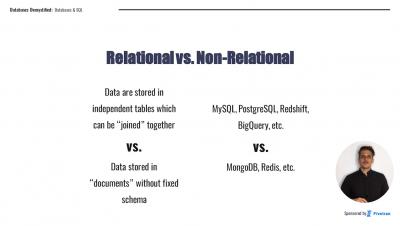
In the first episode of Databases Demystified with Michael Kaminsky, we give a high-level overview of the most important concepts in databases. We start with a brief history of databases going from the invention of relational databases through present day and we talk about the differences between analytical and transactional databases, distributed and single-node databases, and in-memory vs on-disk databases We finish up talking briefly about SQL and what makes it special.

Databases Demystified Lesson 4: Transactions Part 1

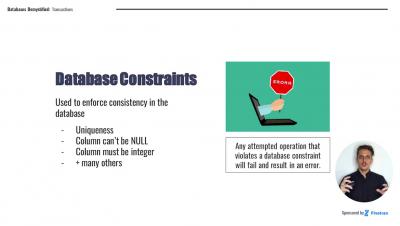
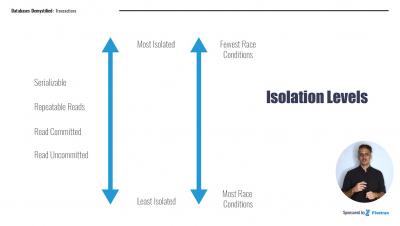
In this episode of Michael Kaminksy's Databases Demystified, we learn all about what a transaction is, and what ACID means. Learn why database constraints are important, and what the commands "begin" "commit" and "rollback" mean. We talk about atomicity, consistency, isolation, and durability and why transactions are so important.

Databases Demystified Lesson 6: Distributed Databases Part 1

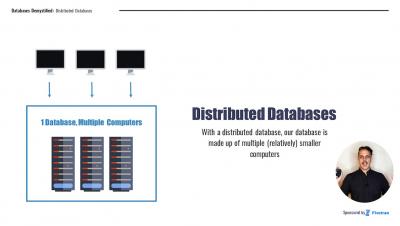
Welcome to episode 6 of Michael Kaminsky's Databases Demystified. In this lesson, we introduce a fascinating and incredibly important topic: distributed databases. We discuss "nodes" and "clusters" and we cover the two major paradigms in distributed databases: big-compute databases and high-availability databases.