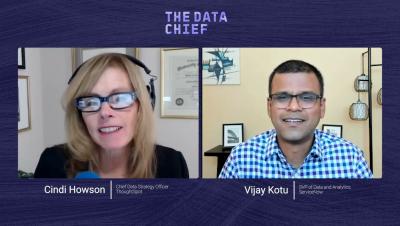
In the final episode of season two of The Data Chief podcast, we talk with authors of four must-read books for data and analytics leaders — two new and two time-tested. As you invest in your continuous learning, here is the full round up of the latest top books I recommend for today’s data and analytics leaders.
Enabling customers and users to quickly find the value within a product is critical for many organizations and at the heart of being a product manager. The approach to driving user growth involves a growth mindset, combining qualitative and quantitative research methods, and driving impactful solutions.
In a company’s early days, the difference between C-level executives and the rest of the organization is simple — employees can walk away from a failure, leaders cannot. Under those conditions, certain types of people thrive in leadership positions and get a company from ideation to production.
For more than 20 years, OpenTable has connected foodies and novice diners with the restaurants they love. But how does its technology work on the back end? To make a long story short: data. Beyond the app and website, OpenTable provides restaurants with software that manages their floor plans, phone reservations, walk-ins, shift scheduling, turn times, and more.
It is becoming increasingly difficult to standardize taste. The myriad culinary preferences and gastric demands of the American population are reflected in the $997B valuation of the U.S. packaged food market in 2020. There has also been a push in recent years to augment trips to the grocery store with at-home meal kits and food delivery services, a trend further accelerated by the onset of quarantine restrictions.
Modern data and analytics leaders know that every business user is different. No two marketers or finance managers will use data in exactly the same way because no two share the same contextual view or understanding of the business. Their challenges are as nuanced as they are complex. And they need insights tailored to their specific needs if they are to be successful at solving business problems with data. Unfortunately, traditional BI tools treat everyone like carbon copies.