Systems | Development | Analytics | API | Testing

The testing disconnect that's undermining your API quality

In 2026, APIs have moved far beyond simple integration points. They’re now strategic business assets powering AI transformation, microservices architectures, and multi-cloud ecosystems. But a critical challenge threatens to undermine digital initiatives: the fragmentation of API testing. As organizations rush to deliver faster, they’re discovering that their testing infrastructure – cobbled together from disparate tools and disconnected processes – has become the bottleneck.

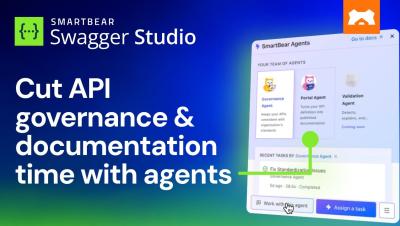
How to Add Intent and Metadata to OpenAPI in Swagger Studio for AI Agents

Modern APIs aren’t just read by developers anymore; they’re also interpreted by tools and AI agents. In this video, Solutions Architect Joe Joyce walks through how to enrich an OpenAPI definition in Swagger Studio with meaningful metadata such as descriptions, summaries, operation IDs, tags, schemas, and examples. You’ll see step-by-step how these additions help tools and automated agents better understand API intent, purpose, and semantics. This turns your OpenAPI definition into a contract that scales beyond documentation.

AI test automation with full visibility | Qmetry + Reflect integration

In this demo, you’ll see how Reflect and QMetry work together to connect automated testing with test management. In this short walkthrough, test execution from Reflect flows directly into QMetry, giving your team better visibility, reducing manual effort, and helping you move faster without losing control of quality. If you’re looking to scale testing while keeping everything organized and traceable, this integration is built for you.

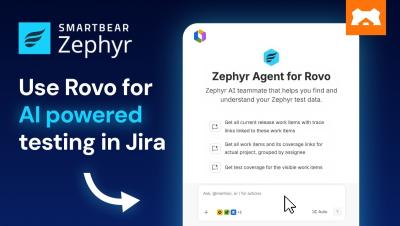
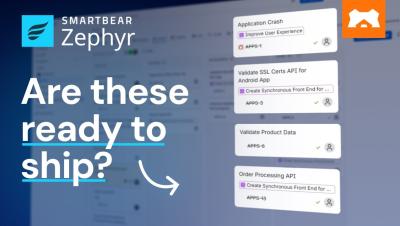
Turn test data into release insights with AI | SmartBear MCP for Zephyr

Testing teams need to know if they’re ready for a release. Getting answers within Jira, however, often means jumping between multiple screens and reports. In this demo, see how you can query your test data with SmartBear MCP for Zephyr to get insights directly from your testing system of record, so you can make faster, more informed release decisions. From within AI tools like Copilot, Claude, or VS Code, you’ll learn how you can.

The quiet crisis in software quality - and what autonomous testing changes

There’s a tension building inside most engineering organizations right now, and not many people are talking about it openly. AI has given development teams an extraordinary gift: the ability to build faster than ever before. Features that once took days can be prototyped in hours. Applications that required large teams can now be scaffolded by a handful of engineers with the right tools. By almost every measure of development velocity, we are living through a remarkable moment.

Tester's guide to digital transformation: Why robust object recognition matters

Digital transformation rarely happens in a clean, technical environment. Most organizations aren’t starting from a blank slate – you’re operating across a mix of legacy desktop applications, internal web systems, custom-built interfaces, and business-critical workflows that must remain stable while modernization continues around them. The central challenge is whether that automation can remain reliable as underlying technologies evolve.

Create tests in Reflect directly from your coding agent!

If you’ve used Claude Code, GitHub Copilot, Cursor, or any coding agent, you already know the feeling. You describe what you want in plain language, the agent figures out the steps, and you watch it work. When something goes wrong, it backs up and tries a different approach. Reflect now brings that same agentic workflow to test automation. Through the SmartBear MCP server, any coding agent that supports MCP can connect to Reflect and build tests from high-level objectives.

BearQ Q&A recap: Top questions from SmartBear's live event

Asked a question in our BearQ livestream? We’ve got your answers. We received 100+ questions during the event and couldn’t get to all of them live, so we pulled together the most common ones and answered them here. In this video, we break down what BearQ can test, how it handles authentication and complex workflows, how the AI works behind the scenes, how it fits into your existing tools, and even how to get early access.

In case you missed it | Meet Smartbear BearQ + application integrity

Missed the live event? Here’s a quick look at what we unveiled. AI has fundamentally changed how applications are built, creating a growing gap between development velocity and your ability to validate what’s being built. That’s why SmartBear delivers application integrity for the AI era – ensuring continuous, measurable assurance that your software just works as intended, with governance to operate at AI speed and scale.

Why we built vision AI into TestComplete: Solving the complex app testing challenge

When we talk to testing teams at enterprise organizations, we hear the same frustrations repeatedly: “Our automation breaks every time the UI changes.” “We can’t test this application because it doesn’t expose accessible properties.” “We spend more time maintaining tests than creating new ones.” These scenarios block test automation adoption for teams that need it most.