Systems | Development | Analytics | API | Testing

Best Practices for Naming REST API Endpoints

REST APIs are a powerful tool to bring together multiple applications. While REST APIs are extremely useful, creating and deploying them into production is a highly complex and time-consuming process. If you’re building your own REST API, you should be familiar with some of the industry best practices for naming REST API endpoints. For many developers, using a development platform is a good way to get started. It streamlines the development process and ensures you're able to get started immediately.

Introduction to Open Source, Open Standards and Self Describing Data

Digitalization is revolutionizing every aspect of our lives, and understanding the concepts of open source and open standards is crucial. But these aren't just geeky tech concepts, they represent a whole philosophy of collaboration and sharing that's fueling innovation. And open standards? Think of them as the great enablers of interconnectivity. These guidelines ensure different technologies can talk to each other and share data seamlessly across platforms.

Creating a Secure SIMATIC PLC REST API Using DreamFactory

Organizations deploying Siemens SIMATIC PLCs (Programmable Logic Controllers) will logically want to track and manage PLC metrics. Exactly how these metrics are managed will depend upon the specific needs of the organization. For instance, organizations that would like to send PLC data directly to a Microsoft SQL Server database can use the TDS (Tabular Data Stream) protocol. But what if you wanted to subsequently access this data via a REST API?

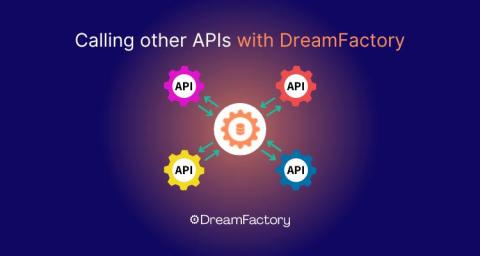
Calling other APIs with DreamFactory

Integrating and calling other APIs is an important step in the development process. APIs allow different systems to communicate and share data, enabling developers to build more dynamic and feature-rich applications. Whether it's accessing third-party services, aggregating data from multiple sources, or automating workflows, the ability to effectively integrate and call other APIs is a key component of a successful software strategy.

Build A Snowflake REST API in Less Than 5 Minutes

Do you have a ton of data sources and do not know how to expose them? Do you know you need a REST API to expose your Snowflake data but don’t know where to begin to build it? Look no further, DreamFactory can take any database and build a fully documented and secure REST API faster than making a sandwich. All you need is your Snowflake credentials and DreamFactory will handle the rest, instantly generating OpenAPI documentation and securing your API by way of API keys. Follow along with the blog!

Combining Multiple Data Sources into One API with DreamFactory

Integrating and calling other APIs is important in the development process. APIs allow different systems to communicate and share data, enabling developers to build more dynamic and feature-rich applications. Whether it's accessing third-party services, aggregating data from multiple sources, or automating workflows, the ability to effectively integrate and call other APIs is a key component of a successful software strategy.

OData vs REST: What You Need to Know

When two different software applications want to join forces by sharing information, it’s not always a perfect union. Different database structures, programming languages, and network protocols tend to complicate the process. When reading about the various API technologies, you’ve probably come across two terms, OData vs REST, and wondered, “what’s the difference?” It turns out that OData vs. REST are two closely related concepts.

Top 10 API Integration Platforms

Nowadays, businesses need to integrate with various applications and services to streamline operations and improve customer experience. Application Programming Interfaces (APIs) play an important role in enabling this integration by letting different software systems to communicate and share data. API integration platforms are the key to maximizing the potential of your APIs.

How to Create a MySQL REST API in 6 Easy Steps

According to StackOverflow’s 2022 survey, 46% of professional developers rate MySQL as the most popular database to use in the workspace. As programmers, we should not be bothered with repeatedly writing code which is otherwise readily available, robust, and well-tested. Yet this problem remains persistent in the REST API space, despite the implementation process being by this point in time rote, repetitive, and prone to error and oversight. This oversight is costly for several reasons.

Creating an Oracle API in Minutes with DreamFactory

Handwriting code for database APIs can be a time consuming and expensive process that often exposes organizations to a variety of risks relating to quality, consistency, and developer effort. DreamFactory specialises in REST API generation for a range of databases that gives you the ability to generate a secure, fully documented API in minutes.