Systems | Development | Analytics | API | Testing

The Reason Behind Stalled AI Projects

As enterprises race to adopt AI, weak data foundations are preventing more than half (58%) of organizations in the United States and Canada from realizing value and contributing to an estimated $108 billion in wasted global AI investment each year, according to a report from Hitachi Vantara. The reason is rarely bad models or lack of ambition.

Why It Matters: Data and AI Literacy Is Now a Business-Critical Skill

One thing has become increasingly clear to me: the businesses that thrive in the AI era won't be the ones with the most data, they'll be the ones where every employee knows how to use it. The World Economic Forum's 2025 Future of Jobs Report names analytical thinking as the top core skill companies need today, and a 2024 Gartner survey found poor data literacy to be one of the top five obstacles to analytics success.

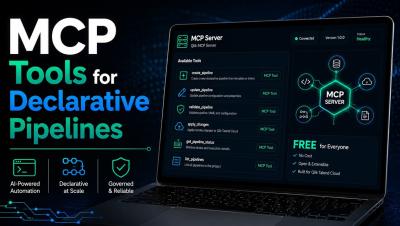
How to Replace Custom Python or PowerShell Scripts for Client Data Ingestion

The fastest way to replace custom Python or PowerShell scripts for client data ingestion is to move each script's logic into a reusable, config-driven pipeline that stores connection details, field mappings, and schedules as metadata instead of code. This guide is for data integration managers and engineers who currently maintain a script per client or per source system. After following it, you'll have a repeatable pattern for onboarding new clients without writing a new script for each one.

What Is the Strangler Fig Pattern?

In this clip from a recent webinar, “From Legacy to Long-Term Stability: Practical Strategies for Web App Framework Migrations,” Zend Senior Solutions Engineer Yeshua Hall explores the strangler fig pattern, one of the most widely recommended strategies for web application and PHP framework migrations. This clip covers how the strangler fig pattern works, why it reduces migration risk, and how you can test, deploy, and validate changes throughout your migration.

Extracting and Harvesting Metadata for Cloudera Data Lineage

This is a comprehensive walkthrough of the metadata extraction process for Cloudera Data Lineage. Learn how to utilize the harvesting agent to set up a new metadata source, such as Informatica Oracle, and perform a local extraction. The video demonstrates how the agent securely reads metadata from databases, ETL tools, and reporting systems, staging it as local XML files to ensure data does not leave the network without explicit action.

How to Upgrade or Retrofit Web Applications with a Data-First Migration

In this clip from a recent webinar, “From Legacy to Long-Term Stability: Practical Strategies for Web App Framework Migrations,” Zend Senior Solutions Engineer Yeshua Hall discusses a data-first approach to the strangler fig pattern, where business logic and database interactions are extracted before rebuilding the user experience. This strategy simplifies data migration, accelerates modernization efforts, and provides a flexible foundation for future development.

Popular PHP Frameworks Compared: Pros, Cons, and Tradeoffs

Choosing the right PHP framework means balancing developer experience, performance, stability, and long-term maintenance. In this clip from a recent webinar, “From Legacy to Long-Term Stability: Practical Strategies for Web App Framework Migrations,” Zend Senior Solutions Engineer Yeshua Hall breaks down the strengths and trade-offs of today's most popular backend frameworks, including Laravel, Symfony, Laminas, and Mezzio.

Why Top Brokerages Are Investing in Data Platforms, Not Just CRM Systems

Open a brokerage’s CRM instance a few years in, and it rarely looks like a sales tool anymore. Somewhere along the way, it picked up MLS feeds, transaction history, integration logic, reporting dashboards, and lately, the raw data behind a first AI pilot. None of that was the plan. Each piece got bolted on because the CRM was the system already sitting there. A CRM was built for a narrower job than that: logging a call, tracking a pipeline, managing the relationship an agent owns.