What was the force upgrade process at Uber?
And 9 other mobile development and process questions answered from our Building Mobile Apps At Scale webinar with Gergely Orosz, Pooja Bhaumik, and Franz Busch.


And 9 other mobile development and process questions answered from our Building Mobile Apps At Scale webinar with Gergely Orosz, Pooja Bhaumik, and Franz Busch.
Much of my focus over the last couple of decades has been in analytics, big data, and AI, and Joe DosSantos and I discussed the progression of these fields over time in a recent Data Brilliant podcast episode. My subtitle for that episode might be, “The Promise and Perils of a Hot New Field,” as we addressed several aspects of how these popular concepts have evolved in the first fifth of the 21st century.
As a mobile app developer or product manager, your primary goal should be to maximize your app's potential reach and effectiveness. If you're not localizing your app, you're not only limiting its global scope — you're also leaving money on the table. Let us show you how to get started!
At the recent Mobile World Congress in Los Angeles, it was clear that 5G tops the innovation agenda in the telecom sector. In fact, 5G will account for two-thirds of total mobile connections in North America by 2025. This goes far beyond the telecom industry though, enabling significant potential for enterprise digitization.
Many organizations have been able to accomplish impressive things using Kong products, including Kong Konnect, Kong Enterprise, Kong Gateway, Kuma and Insomnia. We recently honored four of these enterprises in the inaugural Cloud Connectivity Innovator Awards program during Kong Summit 2021.
We all know how frustrating it can be to lose a network connection, especially while we’re working. That’s why Appian is excited to introduce complete offline mobile capabilities to Appian Mobile as part of the 21.4 release. Mobile offline capabilities allow employees to use their mobile business apps with or without a network connection.
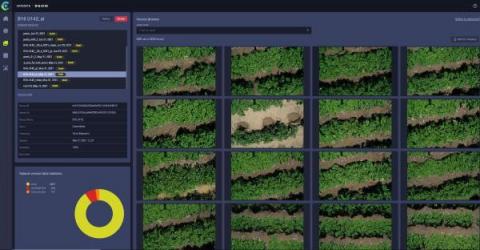
At AgroScout, we’re taking on a massive challenge with some correspondingly exciting upside, both for us and for our customers: We’re creating an automated, AI-driven scouting platform for early detection of pests and disease in vast agricultural areas.
There are good reasons for spreading workloads and applications across multiple clouds. Options include using a combination of public and on-premises cloud platforms, a strategy known as hybrid cloud—or using more than one public cloud provider, a strategy known as multi-cloud. What are those benefits? And what are some of the best strategies for achieving them? Let’s explore that.
A proper onboarding strategy featuring a standard set of processes and tools increases employee retention rates, improves job performance, and creates a happier workforce. In this short guide, we'll look at how poor onboarding experiences can adversely affect mobile development teams, as well as some engineering-specific tips to design great onboarding processes for your prospective mobile developers.