We collect the latest Development, Anaytics, API & Testing news from around the globe and deliver it direct to your inbox. One email per week, no spam.
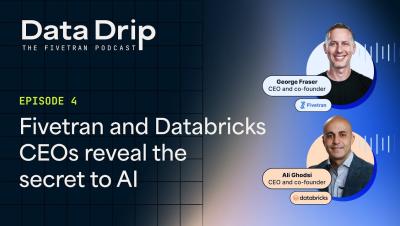
Founders of the world’s leading data companies share their insights on the latest trends in their industry and the keys to turning generative AI into business impact.
GPU as a Service (GPUaaS) serves as a cost-effective solution for organizations who need more GPUs for their ML and gen AI operations. By optimizing the use of existing resources, GPUaaS allows organizations to build and deploy their applications, without waiting for new hardware. In this blog post, we explain how GPUaaS as a service works, how it can close the GPU shortage gap, when to use GPUaaS and how it fits with gen AI.
Microsoft recently introduced a comprehensive analytics solution for its enterprise customers, Microsoft Fabric. The solution offers data movement, data science, real-time analytics, and business intelligence within a single platform. Microsoft Fabric offers a unified platform for data engineering, science, and analytics, integrating data from Power BI, Azure Synapse, and Azure Data Factory, and using open storage for accessibility and portability.
George Fraser, CEO and co-founder of Fivetran, and Ali Ghodsi, CEO and co-founder of Databricks, are building products that power the modern data stack. They offer an insider’s perspective on the hardest parts of building and deploying generative AI in the enterprise.
Adam Bellemare compares four main types of Event-Driven Architecture (EDA): Application Internal, Ephemeral Messaging, Queues, and Publish/Subscribe. Event-Driven Architectures have a long and storied history, and for good reason. They offer a powerful way to build scalable and decoupled architectures. But thanks to its long history, people often have different ideas of what EDA means depending on when they first encountered this architecture.
Struggling to ensure accurate and efficient data exchange? EDI data mapping is the answer to streamlining your business’s communication pipeline. This indispensable process converts data into universally recognizable formats for seamless transactions with trading partners. Discover how to implement EDI data mapping effectively with our comprehensive guide, designed to give you the edge in today’s data-driven marketplace.
Tech debt is the cost of choosing quick solutions over better ones, requiring future rework. It is a fact of life for developers–when work piles up and deadlines approach, you prioritize what’s most important. In the short term, taking the easy road keeps your release schedule on track and your applications running smoothly, at least on the surface.
In our latest research, conducted this year with AIIA and FuriosaAI, we wanted to know more about global AI Infrastructure plans, including respondents’: 1) Compute infrastructure growth plans 2) Current scheduling and compute solutions experience, and 3) Model and AI framework use and plans for 2024. Read on to dive into key findings! Download the survey report now →
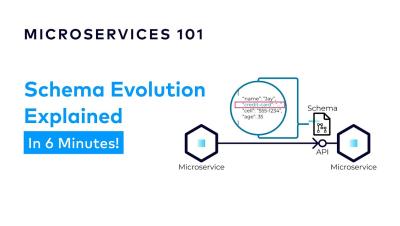
Schema evolution is the act of modifying the structure of the data in our application, without impacting clients. This can be a challenging problem. However, it gets easier if we start with a flexible data format and take steps to avoid unnecessary data coupling. When we find ourselves having to make breaking changes, we can always fall back to creating new versions of our APIs and events to accommodate those changes.
In February, Snowflake released a slew of new features that continue to expand the scope of what you’re able to do with Snowflake, including the public preview of Hybrid Tables. Read on to learn more about everything we announced last month.